Texas Mineral Deed (General Warranty)
County Specific Legal Forms Validated as recently as October 6, 2026 by our Forms Development Team
About the Texas Mineral Deed (General Warranty)
How to Use This Form
- Select your county from the list
- Download the county-specific form
- Fill in the required information
- Have the document notarized if required
- Record with your county recorder's office
What Others Like You Are Saying
"Thanks for providing this service. We had searched for weeks for the correct documents. It might hel…"
"Great website.....fast and easy access!"
"Easy to download this form. I will use it when the time comes to transfer title of my house."
"Exact form needed with perfect instructions. Easy Peazy! Just got my fully recorded document back to…"
"Easy and can add our own additional language in spaces provided. Thank you!"
4.8/5 from 4,831 reviews. Read all
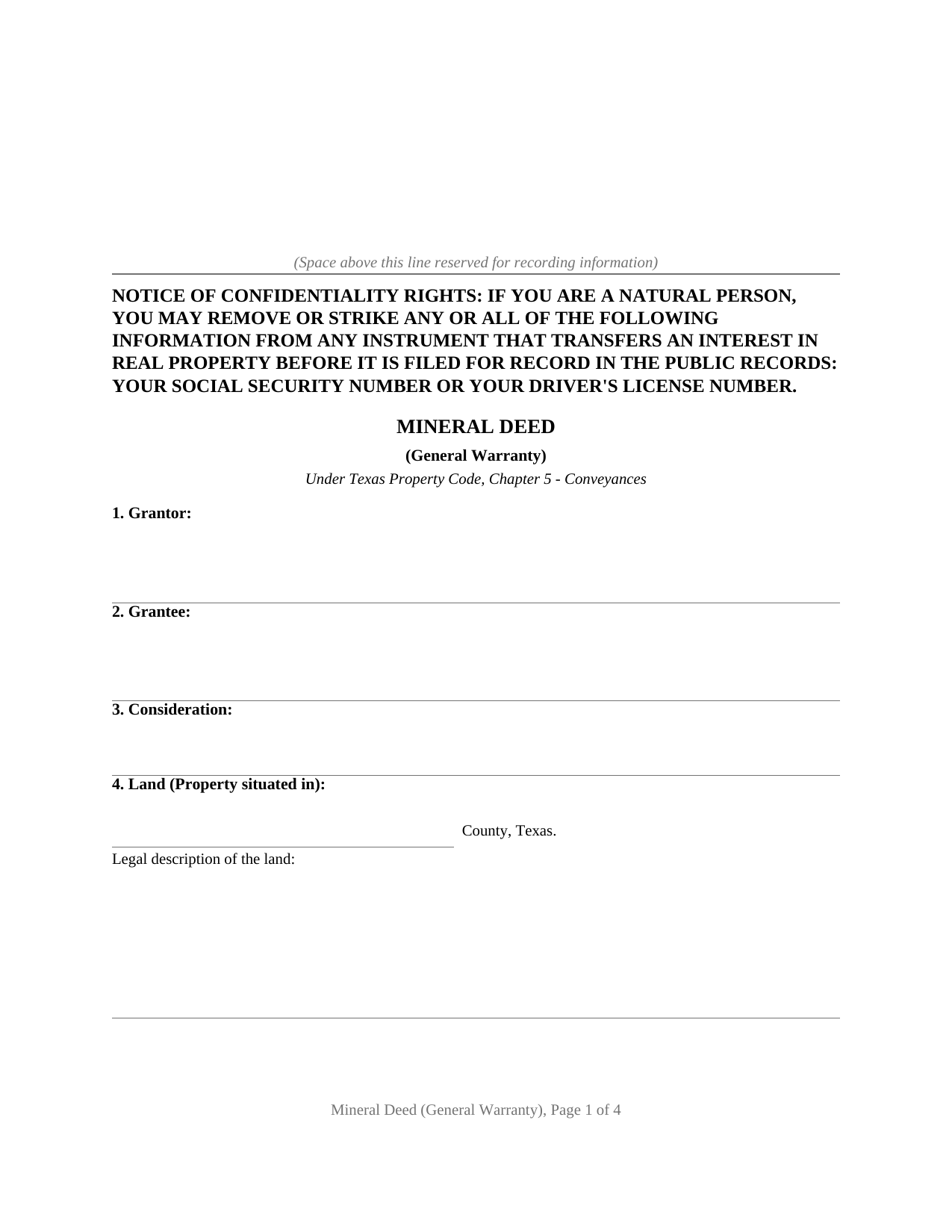
Beneath a Texas tract are two estates, not one. The oil, gas, and other minerals can be owned, taxed, and transferred apart from the dirt on top, and a mineral deed is the instrument that makes that separation or carries a severed mineral interest from one owner to the next. This form prepares a general warranty mineral deed under Chapter 5 of the Texas Property Code, by which a grantor conveys a mineral interest and stands behind the title.
The Five Rights Inside a Mineral Estate
Texas courts describe a severed mineral estate as a bundle of five severable attributes: the right to develop, the right to lease (the executive right), the right to bonus payments, the right to delay rentals, and the right to royalty payments. The phrasing traces to the Texas Supreme Court in French v. Chevron U.S.A. Inc. and is repeated in mineral decisions to this day. A grantor does not have to convey all five: the deed can pass the whole estate, or convey the development and leasing rights while the grantor keeps a royalty, because each attribute is its own property interest.
Conveying the Whole, or Reserving a Piece
When a mineral estate is conveyed, every interest in it transfers unless the grantor specifically reserves something, which makes the reservation section the heart of the form. A grantor who reserves nothing conveys the entire mineral interest owned in the land; a grantor who reserves a one-fourth nonparticipating royalty keeps a share of production while handing over the rights to develop and lease. The completed example shows that reservation, and the guide explains how reservation wording can decide whether a reserved royalty is fixed or floating years later.
A Warranty That Reaches the Whole Chain
This is a general warranty deed. The grantor binds heirs, successors, and assigns to warrant and defend the interest conveyed against every person lawfully claiming it, not merely against claims arising through the grantor. That separates this instrument from a quitclaim, which warrants nothing, and from a deed without warranty, which conveys the property but adds no covenants. Stated exceptions, such as existing leases and prior reservations, are carved out of the warranty.
Signing, Homestead, and Recording
The grantor signs before a notary, and because a mineral deed conveys a present interest during life, marriage matters in a way it does not for a transfer that takes effect at death. Where the land is homestead, Texas Family Code Section 5.001 requires the grantor's spouse to join in the conveyance, so the form carries a joining-spouse signature block and a second notary certificate. Recording then protects the grantee against later purchasers, and a mineral interest underlying land in more than one county is recorded in each county where the land lies. The package includes the fillable deed, a completed example on a realistic Karnes County fact pattern, and a guide that walks every blank. The materials are informational and are not legal advice.
Important: County-Specific Forms
Our mineral deed (general warranty) forms are specifically formatted for each of the 254 counties in Texas.
After selecting your county, you'll receive forms that meet all local recording requirements, ensuring your documents will be accepted without delays or rejection fees.