Texas Mineral Deed (No Warranty)
County Specific Legal Forms Validated as recently as October 12, 2026 by our Forms Development Team
About the Texas Mineral Deed (No Warranty)
How to Use This Form
- Select your county from the list
- Download the county-specific form
- Fill in the required information
- Have the document notarized if required
- Record with your county recorder's office
What Others Like You Are Saying
"Very easy to understand and complete."
"I love this tool and it is easy to work with. The interface is straight forward and notifications ar…"
"Great site easy to use and the documents are great!"
"Not difficult at all! Which is great for me..."
"Easy to use and very helpful"
4.8/5 from 4,836 reviews. Read all
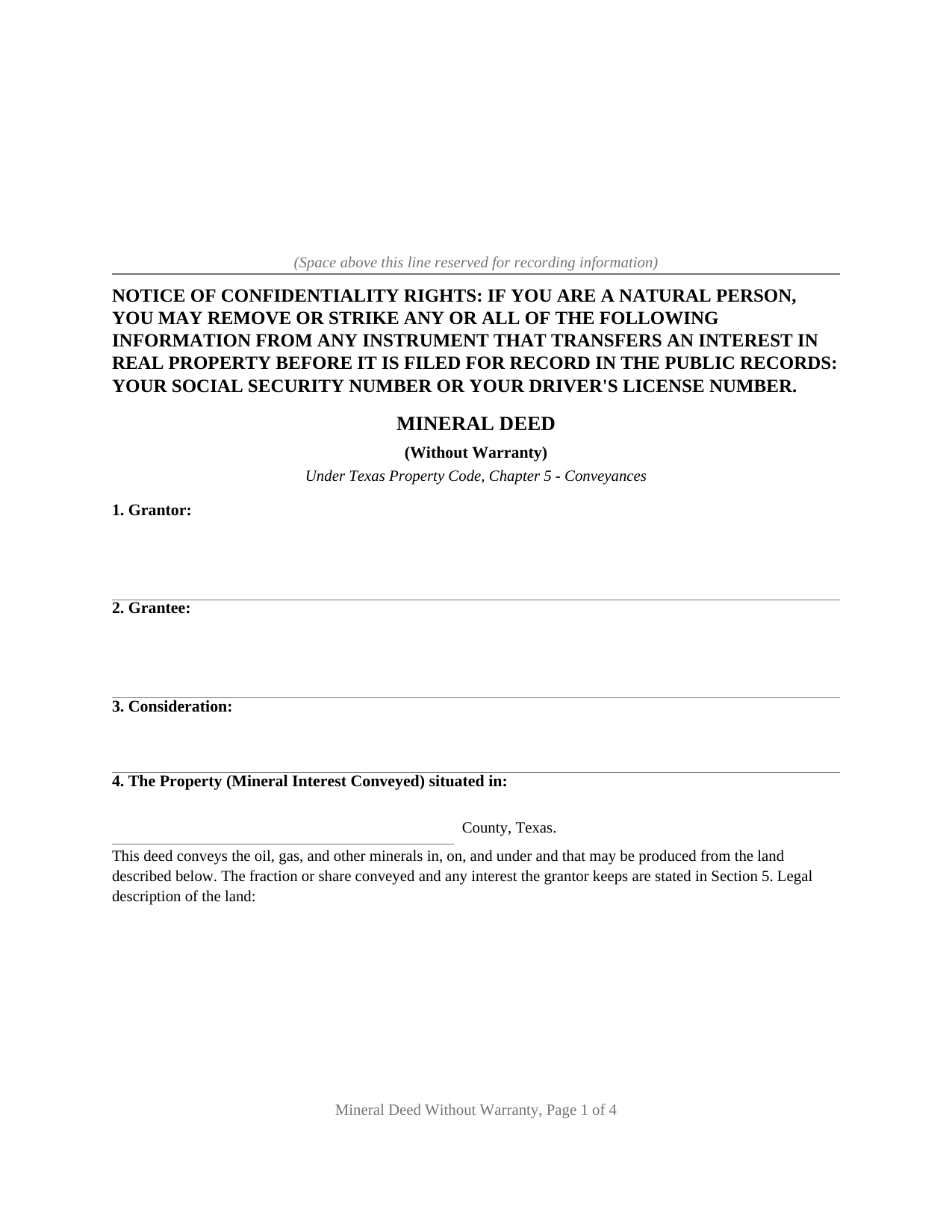
A Texas mineral deed without warranty conveys the oil, gas, and other minerals under a tract of land while the grantor stands behind nothing about the title. It passes whatever mineral interest the grantor owns, using the words of grant that carry title, and then expressly withholds every warranty and every implied covenant. This form prepares that deed under Chapter 5 of the Texas Property Code.
Conveyance and warranty are two different things
A Texas deed does two jobs at once, and they can be separated. The granting clause moves title; the warranty is a separate promise to defend it. Property Code Section 5.022 says outright that a covenant of warranty is not required in a conveyance, and that the parties may use any clause not in contravention of law. So a deed can convey with the word grant and carry no warranty at all. The grantee still receives the mineral interest; what the grantee gives up is any recourse against the grantor if that interest proves smaller than hoped, or fails.
The express exclusion that Section 5.023 requires
Texas does not let the words of grant go bare. Section 5.023 provides that the word grant or convey implies two covenants unless the conveyance expressly provides otherwise: that the grantor has not already conveyed the estate to someone else, and that the estate is free from encumbrances. To strip a deed of those covenants, the deed has to say so in the instrument. This form does, in a no-warranty paragraph that excludes the warranties of title and the covenants Section 5.023 would otherwise imply, so the deed reads as a true conveyance without warranty rather than a warranty deed in disguise.
Why it is not a quitclaim
A deed without warranty and a quitclaim are easy to confuse and legally distinct. Texas courts look at what the words convey: an instrument that conveys the property itself is a conveyance, even with no warranty, while one that passes only the grantor's right, title, and interest can be read as a quitclaim, which title examiners flag in the chain. This form conveys the minerals as the Property, with the words grant, sells, and conveys, and handles the no-warranty character in a separate paragraph, so the deed does not slide into quitclaim territory. The Texas Quitclaim Deed is the instrument for passing only whatever interest the grantor may have.
The mineral estate it conveys
Once minerals are severed from the surface, Texas treats the mineral estate as a separate fee estate, dominant over the surface and carrying an implied right to use the surface as reasonably necessary to explore for and produce. The estate is a bundle of five rights, to develop, to lease, and to receive bonus, delay rentals, and royalty. The form conveys that estate or a stated fraction of it, with a section for the fraction conveyed and any interest the grantor reserves. A mineral interest is not the same as a royalty interest, which carries only a share of production; this deed conveys the mineral estate, not a bare royalty.
Signing, the homestead question, and recording
The grantor signs before a notary, and the form carries a joining-spouse signature line because a mineral deed, unlike a transfer on death deed, is a present conveyance, so the Family Code homestead joinder rule reaches it where the minerals are part of the homestead. The confidentiality notice required by Property Code Section 11.008 appears at the top of the first page. Senate Bill 16 added a photo identification requirement at the recording counter for instruments filed in person on or after December 4, 2025. The deed is recorded with the county clerk of the county where the land is located, which places the conveyance in the chain of mineral title.
The package includes the blank deed as a fillable PDF, a completed example built on a realistic Karnes County fractional-mineral conveyance, and a plain-language guide that walks through every section, the statutory framework, the distinction between mineral and royalty interests, and the recording steps. The materials are informational and are not legal advice.
Important: County-Specific Forms
Our mineral deed (no warranty) forms are specifically formatted for each of the 254 counties in Texas.
After selecting your county, you'll receive forms that meet all local recording requirements, ensuring your documents will be accepted without delays or rejection fees.