Texas Royalty Deed
County Specific Legal Forms Validated as recently as October 14, 2026 by our Forms Development Team
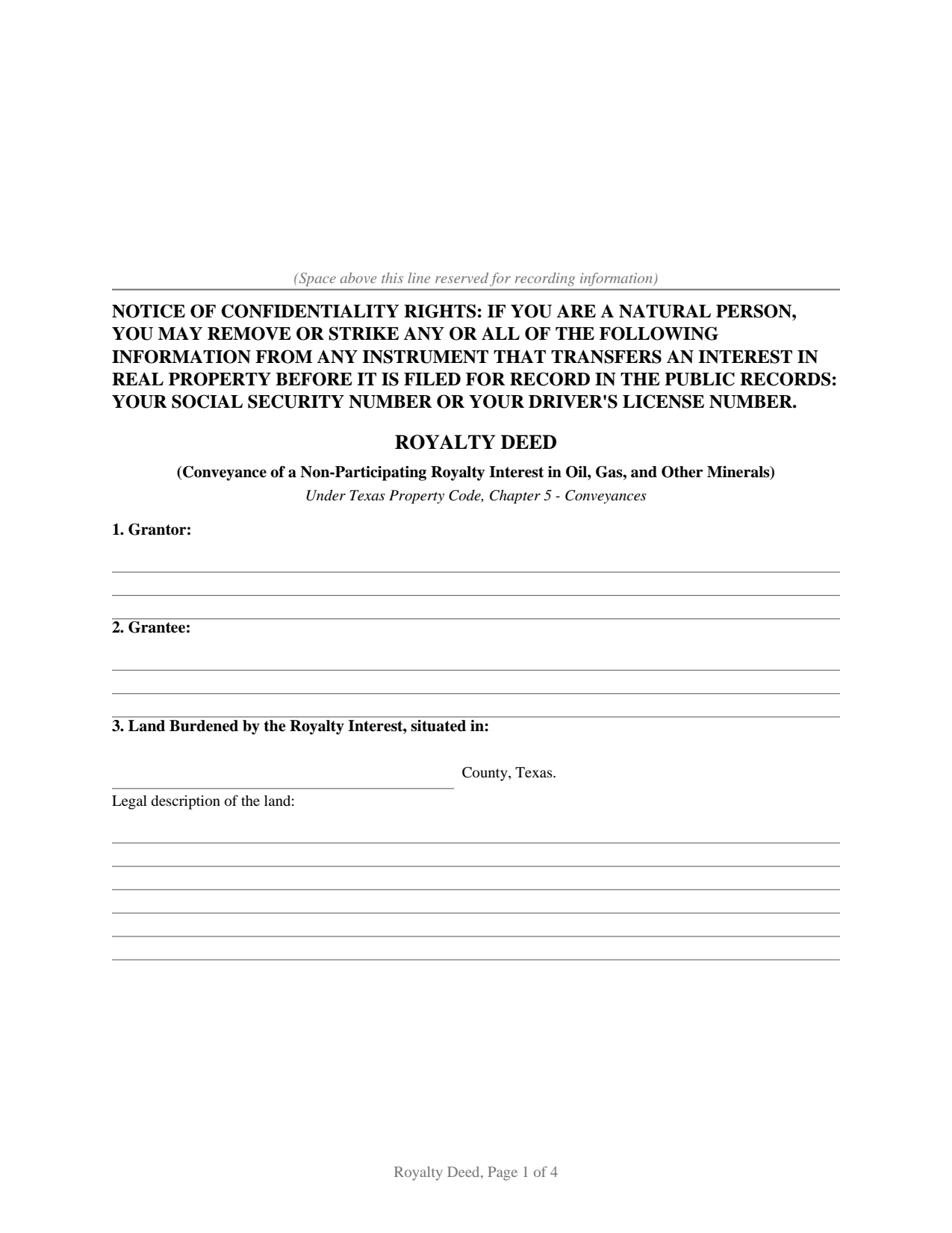
About the Texas Royalty Deed
How to Use This Form
- Select your county from the list
- Download the county-specific form
- Fill in the required information
- Have the document notarized if required
- Record with your county recorder's office
What Others Like You Are Saying
"I requested a copy of some documents and within the hour, they were waiting for me in PDF form. It w…"
"This is an excellent service. And very easy to use."
"Thank you!"
"Much easier to navigate than some others I've been on. Liked the upfront pricing."
"So glad I found this form. Very easy to download and looks like all the instructions are there to co…"
4.8/5 from 4,833 reviews. Read all
A Texas royalty deed conveys a share of what an oil or gas well produces, free of the cost of producing it, without handing over the power to lease the minerals or drill them. This form prepares a royalty deed that conveys a non-participating royalty interest in the oil, gas, and other minerals under a described tract, with a general warranty of title and subject to any existing lease.
One Stick From the Bundle
Texas treats the mineral estate as a bundle of five rights: the right to develop the minerals, the right to lease them, the right to a lease bonus, the right to delay rentals, and the right to royalty. A royalty deed conveys only the last one. The grantee receives a fractional share of production but takes no part in signing leases, no say in whether a well is drilled, and no bonus or delay rental. Because the holder does not participate in those decisions, the interest is a non-participating royalty interest, often shortened to NPRI.
That single-stick character is what the form makes unmistakable. Texas courts read a deed by its whole text, and the words decide whether an interest is royalty or mineral in nature. Following the line of cases from Watkins v. Slaughter through Temple-Inland Forest Products Corp. v. Henderson Family Partnership, the form names the interest a royalty interest, states that it bears none of the costs of production, and strips the executive, development, bonus, and delay rental rights. A deed that merely grants minerals in and under the land, by contrast, tends to create a mineral interest, a different instrument.
Fixed or Floating
A royalty fraction can be written two ways, and the choice changes what the grantee collects when an old lease ends and a new one begins at a different rate. A fixed royalty is a set fraction of gross production, such as a fixed one-sixteenth of everything the well yields, and it does not move when the lease changes. A floating royalty is a fraction of whatever royalty the lease in force reserves, so it rises and falls with the lease rate. Decades of Texas litigation over double-fraction language, the kind that reads one-half of one-eighth, trace back to deeds that left this ambiguous, with Luckel v. White and Hysaw v. Dawkins among the leading cases. The form gives separate space to state the size of the interest and whether it is fixed or floating.
Subject to the Lease and Recorded for Protection
A royalty is paid under the terms of the lease that governs the well, so the form identifies any existing oil and gas lease the conveyance is made subject to, along with other matters of record. A subject-to clause also limits the conveyance to what the grantor actually owns. A royalty interest is an interest in land, so the deed is recorded with the county clerk where the land lies, which protects the grantee against a later purchaser from the same grantor. The county appraisal district then lists the interest as real property for ad valorem tax, since Texas treats an interest in minerals as real property.
What the Package Includes
The package includes the royalty deed as a fillable PDF, a completed example filled in for a realistic Reeves County fact pattern, and a plain-language guide that walks through every section and explains the fixed and floating choice. The materials are informational and are not legal advice. A grantor conveying the minerals themselves, with leasing and bonus rights, looks to the Texas Mineral Deed instead.
Important: County-Specific Forms
Our royalty deed forms are specifically formatted for each of the 254 counties in Texas.
After selecting your county, you'll receive forms that meet all local recording requirements, ensuring your documents will be accepted without delays or rejection fees.