Kentucky Full Release of Memorandum of Contract
County Specific Legal Forms Validated as recently as October 13, 2026 by our Forms Development Team
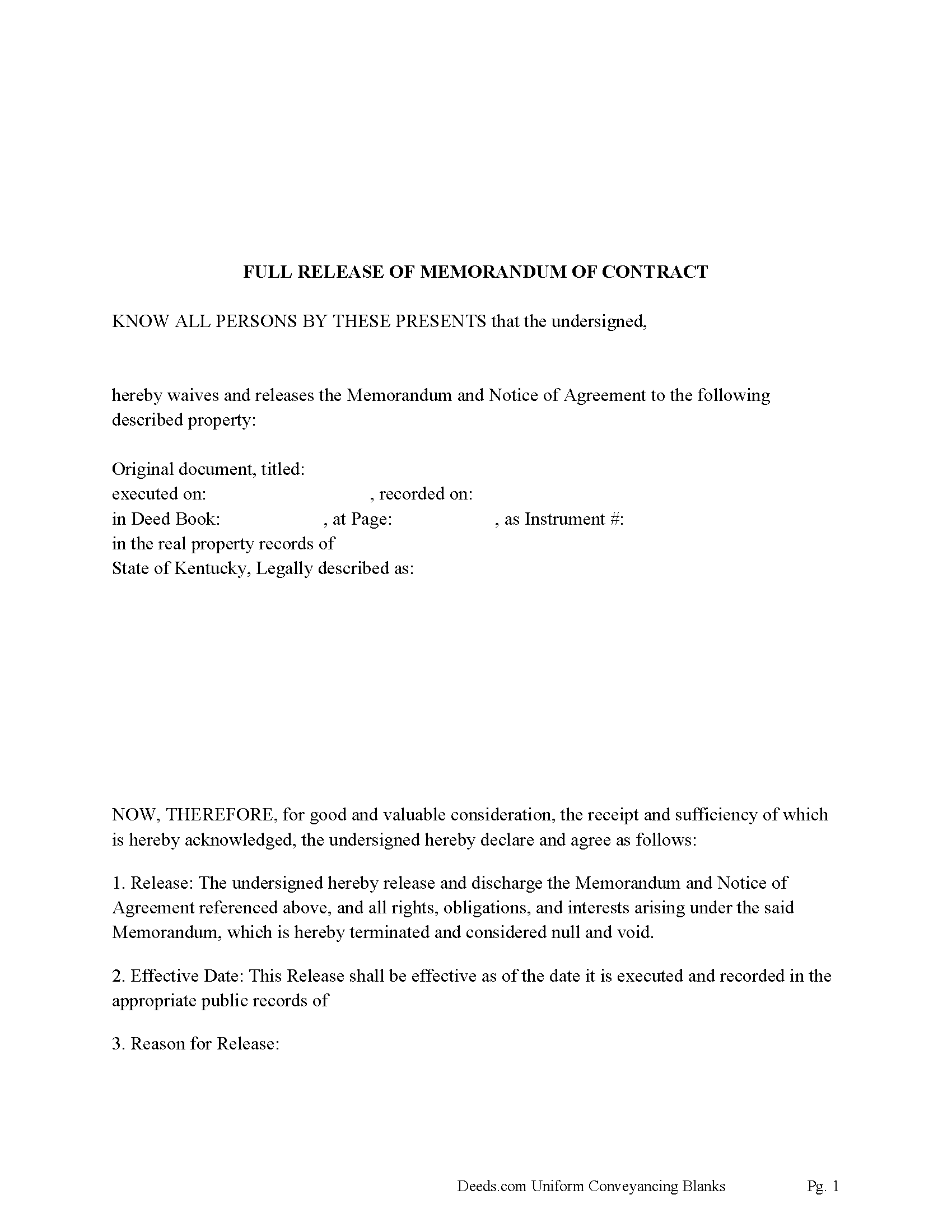
About the Kentucky Full Release of Memorandum of Contract
How to Use This Form
- Select your county from the list
- Download the county-specific form
- Fill in the required information
- Have the document notarized if required
- Record with your county recorder's office
What Others Like You Are Saying
"This was such an easy transaction and quicker than if I went to the recording office. During this ti…"
"So happy to have found this site. It’s just what I was looking for."
"Couldnt have been easier. Docs recorded the next day!"
"Very good hope to use in the future."
"Found exactly what I was looking for and it helped tremendously."
4.8/5 from 4,828 reviews. Read all
Once the contract is fulfilled, terminated, or void, the recorded memorandum needs to be released to:
1. Clear Title
A recorded memorandum clouds the title and may prevent:
Refinancing
Selling the property
Title insurance being issued
Releasing it removes the cloud and restores a clear record of ownership.
2. Document the End of the Agreement
A release shows that the agreement no longer has legal force.
It protects both parties from future disputes or claims.
3. Protect Future Buyers
Prevents confusion or legal complications for a future buyer or lender who may otherwise believe the contract is still active.
When to Release a Memorandum of Contract
You should release the memorandum as soon as one of the following happens:
1. The Contract is Completed
The buyer made the final payment and received the deed.
At this point, the contract for deed is fulfilled, and the memo should be released.
2. The Contract is Terminated
Due to buyer default
Mutual agreement to cancel
Abandonment of the property
Any reason the deal is no longer in force
In these cases, the party who recorded the memorandum (usually the buyer) should file a Release of Memorandum of Contract with the County Clerk where it was originally recorded.
3. By Court Order
If one party refuses to release it (e.g., an uncooperative buyer), the other party may file a quiet title action and obtain a court order to release it.
Who Releases It?
Typically the buyer (as the “releasor”), because they usually record the memorandum.
But if the buyer is in default, the seller may need to:
Request the release
Or take legal action to force it
Record with the County Clerk’s office.
For us in Kentucky only.
Important: County-Specific Forms
Our full release of memorandum of contract forms are specifically formatted for each of the 120 counties in Kentucky.
After selecting your county, you'll receive forms that meet all local recording requirements, ensuring your documents will be accepted without delays or rejection fees.