Colorado Trustee Deed
County Specific Legal Forms Validated as recently as September 11, 2026 by our Forms Development Team
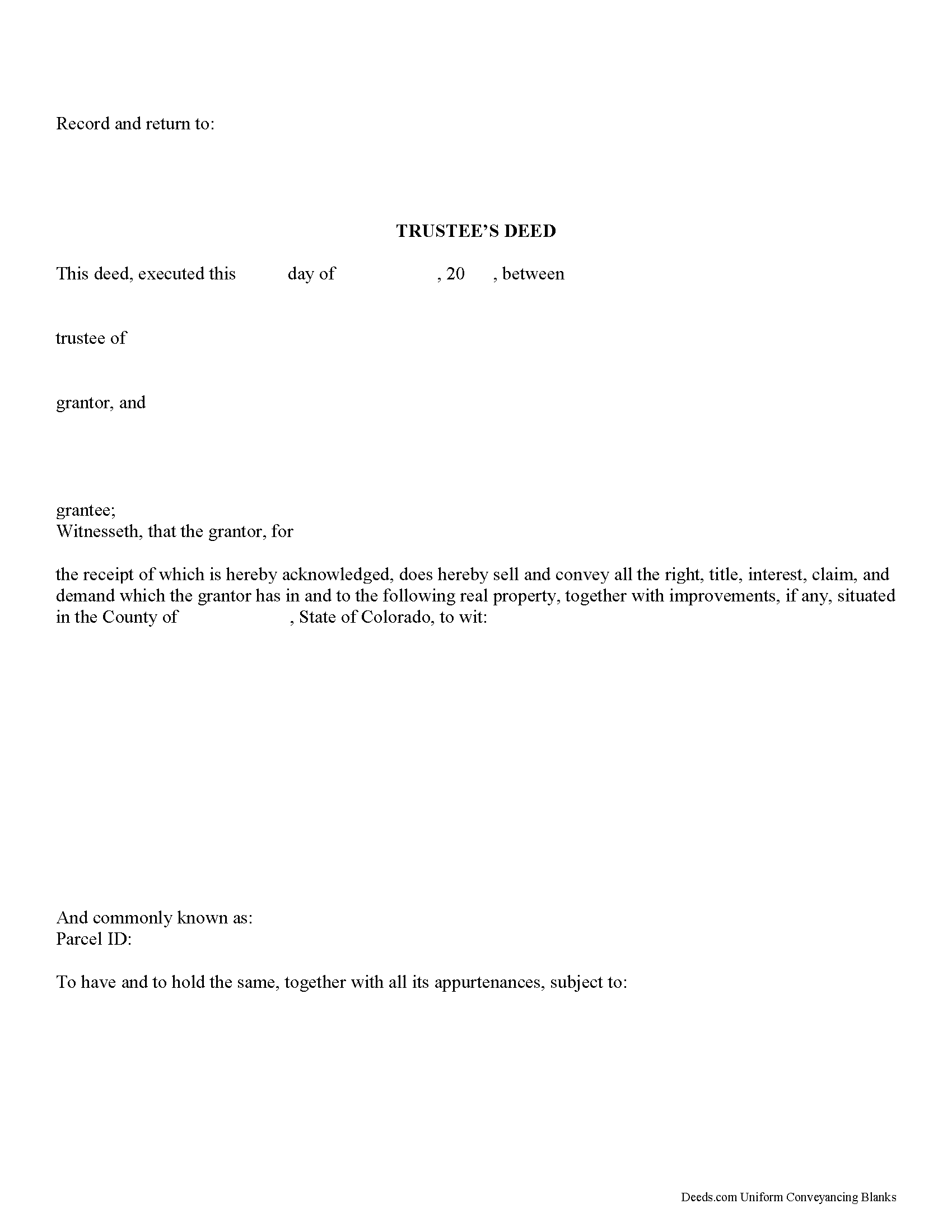
About the Colorado Trustee Deed
How to Use This Form
- Select your county from the list
- Download the county-specific form
- Fill in the required information
- Have the document notarized if required
- Record with your county recorder's office
What Others Like You Are Saying
"good forms thanks, irene"
"This was my first time using Deed.com. It was easier than I expected. The service is more convenient…"
"The web cite is very easy to navigate through making a document process simple to obtain."
"Quick assistance with same day recording. The tech identified barriers to successful Recordation suc…"
"Deeds.com is a wonderful website. I highly recommend them and would use them again in the future."
4.8/5 from 4,828 reviews. Read all
A trustee's deed is a form of conveyance used in trust administration and named for the person executing the deed. A trustee, as the grantor, uses the deed to convey real property out of a trust and vest title in the name of the grantee.
Note: A trustee's deed is separate from a public trustee's deed, which is a form of conveyance used by a county-appointed public trustee to transfer foreclosed property under a deed of trust containing a power of sale.
Generally, a Colorado trustee's deed is a bargain and sale deed. A bargain and sale deed conveys all interest in real property a grantor has without warranties of title, and recites consideration, which is the entire monetary compensation the grantee has paid for the transfer. Some trustee's deeds contain special warranties, however. A special warranty deed warrants the title only for the duration of the grantor's ownership of the property, and may contain further limitations.
In order for a trustee to convey trust property pursuant to C.R.S. 38-30-108.5, a statement of authority must be on record certifying the trustee's authority to act on behalf of the trust.
The trustee's deed follows the format established under C.R.S. 38-30-113. In addition, it references the name and date of the trust on behalf of which the trustee is acting, as well as the trust's legal mailing address as specified in the statement of authority.
As with all documents affecting real property, the deed requires a legal description of the subject real property, including the commonly known address and assessor's parcel identification number. All acting trustees are required to sign the deed in the presence of a notary public. The deed is recorded in the same county in which the subject real property is situated.
(Colorado Trust Deed Package includes form, guidelines, and completed example)
Trust law is complex, as each situation is unique. Consult a lawyer with any questions concerning trust law.
Important: County-Specific Forms
Our trustee deed forms are specifically formatted for each of the 64 counties in Colorado.
After selecting your county, you'll receive forms that meet all local recording requirements, ensuring your documents will be accepted without delays or rejection fees.