Texas Warranty Deed (Two Grantors)
County Specific Legal Forms Validated as recently as October 13, 2026 by our Forms Development Team
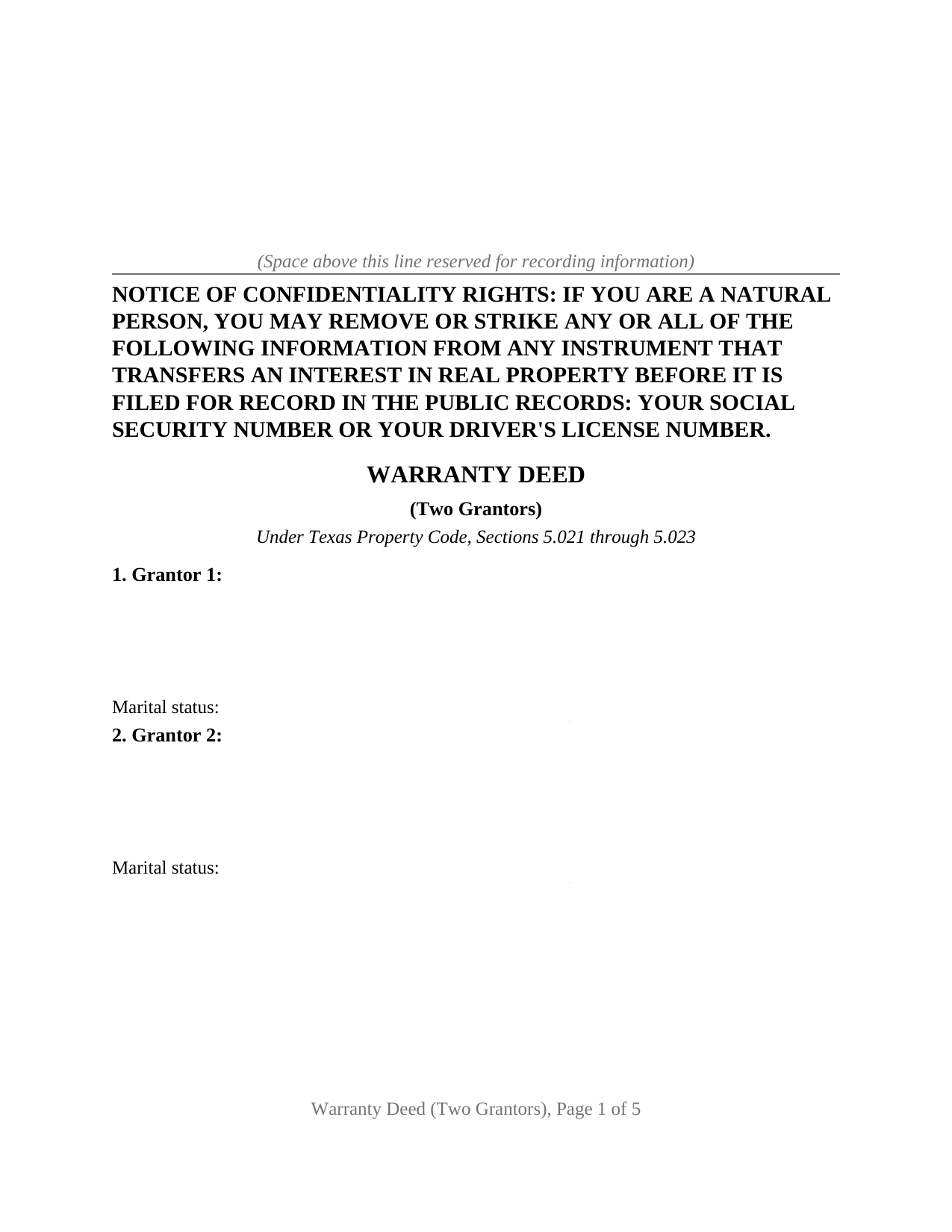
About the Texas Warranty Deed (Two Grantors)
How to Use This Form
- Select your county from the list
- Download the county-specific form
- Fill in the required information
- Have the document notarized if required
- Record with your county recorder's office
What Others Like You Are Saying
"thank you for all your help and patience. I would highly recommend Deeds.com to everyone. Sincerely,…"
"Awesome site great paperwork EZ Forms great."
"Excellent service and the time the documents send back to me was also excellent"
"Using Deeds.com could not have been easier. The examples and line-by-line instructions helped a lot!…"
"Why is Dade County not listed for the Lady Bird Deed?"
4.8/5 from 4,825 reviews. Read all
Full title to Texas real estate held in two names passes only when both owners join the conveyance. The Texas warranty deed for two grantors is drafted for exactly that record: one deed carrying two grantor blocks, two signatures, and a single covenant of general warranty that binds both signers, so the grantee takes the entire two-owner title through one instrument.
A General Warranty Made by Both Grantors
Texas Property Code Section 5.022 recognizes any deed the same in substance as its statutory pattern as conveying a fee simple estate with a covenant of general warranty. This deed follows that pattern in modern wording: the grantors GRANT, SELL, AND CONVEY the property, TO HAVE AND TO HOLD it with all rights and appurtenances, and WARRANT AND FOREVER DEFEND it against every person whomsoever lawfully claiming any part of it. A construction section then does the two-grantor work, defining Grantor to mean each of the two grantors and making the covenant joint and several, so each signer stands behind the whole title conveyed rather than half of a promise. Section 5.023 places implied covenants of prior nonconveyance and freedom from encumbrances beneath the words grant and convey, and this deed keeps both, so the warranty carries its full statutory depth through the entire chain of title.
Two Grantor Blocks, Two Certificates
The deed recites exactly two grantors: two natural persons, each identified by full legal name and mailing address with a marital status entry beside the name. Both sign, and each signature carries its own acknowledgment certificate, so the grantors may acknowledge on different days, in different counties or states, before different notaries; a co-owner who lives across the state signs near home, and the deed still records as one instrument. The remaining numbered sections take the grantee names and addresses with an optional co-ownership designation, the consideration, the property's county, legal description, and street address, the recorded instrument by which the two owners hold, and the exceptions that bound the covenant.
A vesting deed that named two grantees, undivided interests that came to rest in two owners by inheritance or purchase, and spouses whose acquisition deed carries both names all present the two-name record this deed recites, the instrument customers also search as a joint warranty deed or a two-seller warranty deed. The form is not set up as a one-owner or entity instrument: title standing in a single name presents a one-grantor record, a company or trustee holding presents entity and fiduciary signature architecture, and title in three or more names presents a record a two-grantor deed does not describe.
Where the Warranty Stops
A general warranty describes the title honestly only when its edges are stated. A dedicated reservations and exceptions section lists the recorded easements, restrictive covenants, and mineral reservations the property already carries, and an incorporation sentence makes everything listed there a carve-out from both the conveyance and the warranty. The source of title section identifies the recorded instrument by which the two grantors hold, the reference a title examiner matches against the county records to connect this deed to the chain behind it.
From Signing to the County Records
Acknowledgment before a notary is what makes the deed recordable, with certificates following the short forms of Civil Practice and Remedies Code Chapter 121, and a typed or printed name sits under each signature per Local Government Code Section 191.007(e). The deed is then recorded with the county clerk of the county where the property is located. Texas collects no deed transfer tax and asks for no companion filing, the Property Code Section 11.008 confidentiality notice stands at the top of page one in boldfaced capitals, and a mailing address for each grantee keeps the filing fee at the standard rate under Section 11.003. Since December 4, 2025, a person presenting a deed in person shows government-issued photo identification at the counter under the Senate Bill 16 amendments. Under Section 13.001 an unrecorded conveyance binds the parties but is void as to a later purchaser for value without notice, which is why the signed deed goes promptly to the clerk.
The download delivers the blank two-grantor deed as a fillable PDF with a non-recorded instructions page, a completed example filled in for a realistic Hays County sale, and a plain language guide that walks through every numbered section, the forms of co-ownership Texas recognizes on the grantee side, and the path to the county records. The materials are informational and are not legal advice.
Important: County-Specific Forms
Our warranty deed (two grantors) forms are specifically formatted for each of the 254 counties in Texas.
After selecting your county, you'll receive forms that meet all local recording requirements, ensuring your documents will be accepted without delays or rejection fees.