Virginia Transfer on Death Revocation
County or Independent City Specific Legal Forms Validated as recently as October 9, 2026 by our Forms Development Team
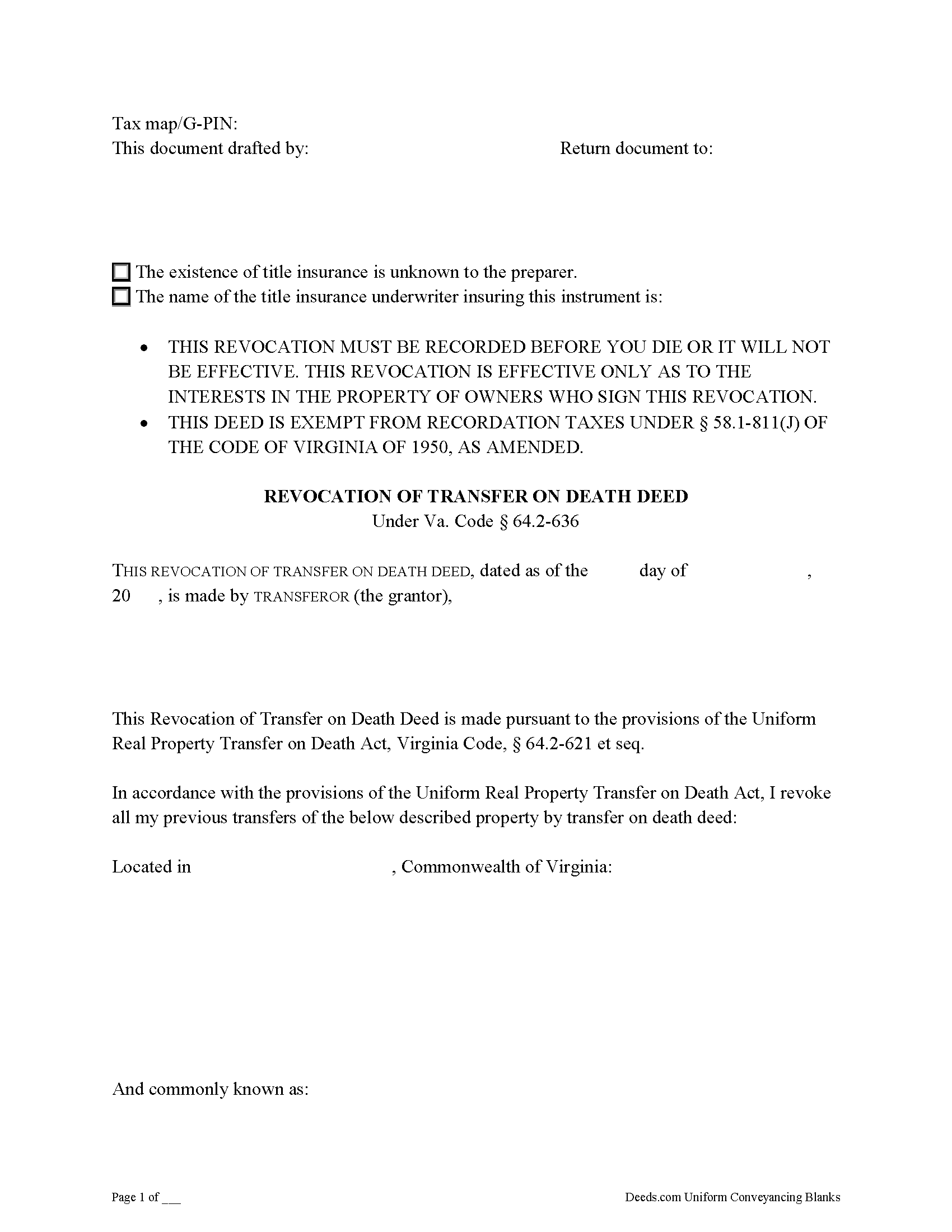
About the Virginia Transfer on Death Revocation
How to Use This Form
- Select your county or independent city from the list
- Download the county or independent city-specific form
- Fill in the required information
- Have the document notarized if required
- Record with your county or independent city recorder's office
What Others Like You Are Saying
"This is the best thing I have ever done with this being my first time doing a quick claim. This has …"
"Very easy to use. Very informative. I think this is a very good service and is worth the $19 especia…"
"DEEDS.COM IS THE BEST WAY TO E-RECORD DEEDS. THEY ARE FAST, POLITE AND A FANTASTIC DEAL FOR THE SERV…"
"I thank you for your service. I received the needed information."
"Very easy to purchase and download."
4.8/5 from 4,828 reviews. Read all
As of July 1, 2013, Virginia joined the growing number of states allowing transfer on death deeds. These instruments are governed by the Uniform Real Property Transfer on Death Act (URPTODA), which is incorporated into the Virginia statutes at 64.2-621 et seq.
One of the most useful characteristics of this estate planning tool is its flexibility. Life is unpredictable, and it's important to update wills and other documents dealing with what happens after death. For most deeds, once the owner/transferor signs and records the document, the transfer of title is completed and permanent. With transfer on death deeds, though, recording the executed form sets out the owner's intended plans for the property, but only after his/her death -- while alive, the owner maintains absolute control over and possession of the real estate. Because the conveyance is only for a potential future interest, and generally involves no consideration (money or something else of value given in exchange for the property), these deeds can be revoked for any reason, and at any time during the owner's life.
The Virginia statutes define the processes available for revoking a transfer on death deed at 64.2-630. The primary methods are executing a new transfer on death deed that explicitly revokes or changes the named beneficiary on one that was previously recorded; executing a revocation instrument; or executing an inter vivos deed, permanently transferring ownership of the real property to another owner. All of the methods require that the instrument changing the status of a transfer on death deed be executed and recorded DURING THE OWNER'S LIFE.
Each situation is unique, so carefully review all the options and their potential advantages and consequences before deciding on the appropriate method for revoking a transfer on death deed.
(Virginia Revocation of TOD Package includes form, guidelines, and completed example)
Important: County or Independent City-Specific Forms
Our transfer on death revocation forms are specifically formatted for each of the 132 county or independent cities in Virginia.
After selecting your county or independent city, you'll receive forms that meet all local recording requirements, ensuring your documents will be accepted without delays or rejection fees.