Indiana Warranty Deed
County Specific Legal Forms Validated as recently as October 21, 2026 by our Forms Development Team
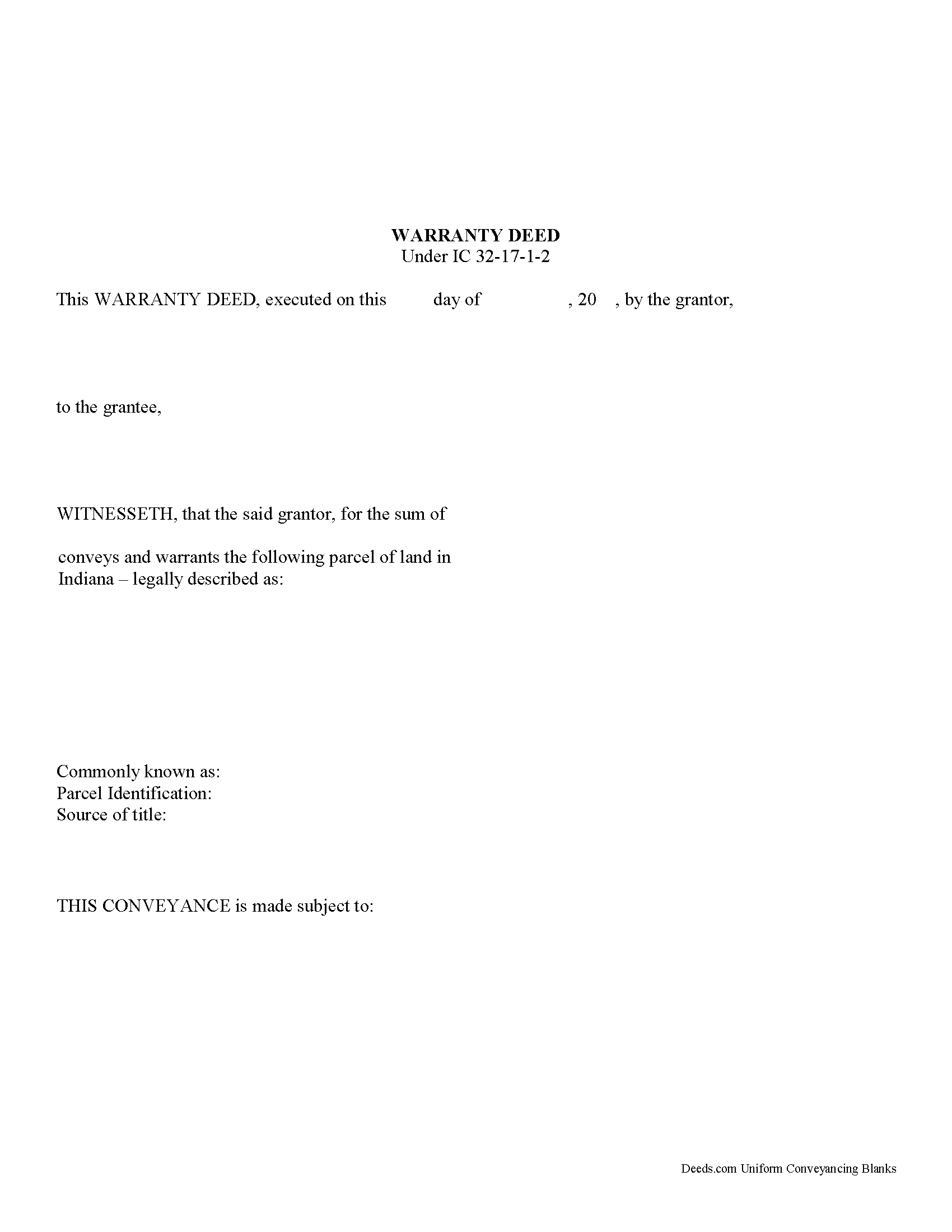
About the Indiana Warranty Deed
How to Use This Form
- Select your county from the list
- Download the county-specific form
- Fill in the required information
- Have the document notarized if required
- Record with your county recorder's office
What Others Like You Are Saying
"Great..."
"Perfect, blank forms, just what I ordered. Easy to download, understand, and complete."
"Thanks again for such excellent service, and always a pleasure!"
"Very helpful and fast."
"Easy to purchase and a reasonable price. Documents were easy to add information. Examples proved han…"
4.8/5 from 4,832 reviews. Read all
Indiana compresses a full set of title guarantees into two words. Under Indiana Code 32-17-1-2, a conveyance worded in substance as "A.B. conveys and warrants to C.D." passes a fee simple and brings five covenants of title with it, and this fillable Indiana warranty deed is built around that sentence. The party blocks are open blanks rather than preprinted patterns, so one or two owners may convey to one or two grantees on the same form.
What the statute attaches to two words
The covenants never have to be typed into the deed. Indiana Code 32-17-1-2(b) attaches them to the operative wording itself: seisin, the right to convey, quiet possession, freedom from every encumbrance, and the duty to warrant and defend against all lawful claims. They run from the grantor and from the grantor's heirs and personal representatives, and they answer for the whole recorded history of the parcel rather than for the years this particular owner held it. That backward reach is what makes it a general warranty deed. Because the encumbrance covenant is written in absolute terms, the form carries an exceptions section: recorded easements, plat restrictions, and current taxes named there sit outside the covenant instead of breaching it, and Indiana Code 32-21-1-17 lets a deed pull those matters in by reference to the instrument that records them.
A deed that says sealed when no seal is needed
Indiana's conveyance statutes still describe a deed as signed, sealed, and acknowledged, and both Indiana Code 32-21-1-13 and the warranty form read that way today. One section earlier, Indiana Code 32-21-1-12 answers the puzzle: no private seal or ink scroll is necessary to validate a conveyance of land executed by a natural person, business trust, or corporation. So the grantor's signature line on this form carries no seal notation, while the notarial officer's own seal remains part of the certificate, beside the commission expiration and county of residence Indiana recorders look for and the printed name that Indiana Code 36-2-11-16(c) places under every signature.
One form, one or two names on each side
This is the base configuration of the Indiana warranty deed, and it is deliberately unfixed. The grantor block takes one or two individual owners with whatever status the record calls for. The grantee block takes one or two names followed by any designation of how they hold, drawn from the Indiana menu of tenancy in common, joint tenancy with right of survivorship, and tenancy by the entirety between spouses. The execution area carries two signature blocks and two acknowledgment certificates, and the second of each is simply left blank where a single owner conveys, so two grantors may also acknowledge on different days or before different officers. Nothing about marital status, vesting, or capacity is preprinted anywhere on the instrument, which means the words that fix the estate are the words written into the blank. One owner conveying alone and two owners of record joining in one deed are both patterns this form recites without any change to its printed text. Configurations built on a different execution pattern sit outside it: an entity signing through an officer, a trustee conveying trust property, a conveyance made under a power of attorney, and any transfer with three or more owners on a side.
Recording decides priority, not validity
A signed and acknowledged Indiana deed is good between the parties on delivery. Recording answers a different question. Indiana Code 32-21-3-3 leaves a fee simple conveyance ineffective against anyone but the grantor, the grantor's heirs and devisees, and persons with notice, unless the deed is recorded; Indiana Code 32-21-4-1 then voids an unrecorded conveyance against a later good faith purchaser for value whose instrument reaches the record first. Getting to the recorder is a three counter errand, since a transfer for valuable consideration travels with a sales disclosure form reviewed by the county assessor and picks up the county auditor's endorsement for taxation on the way. The recorder's fee for a deed is fixed statewide at twenty five dollars, and Indiana levies no documentary stamp tax and no real estate transfer tax.
The download includes the fillable warranty deed form, a completed example that fills every blank for a fictional Allen County conveyance, and a plain-language guide covering the statutory framework, each numbered section, the notarization, and the recording sequence. The instrument is also searched as an Indiana general warranty deed or a statutory warranty deed form; the materials are informational and are not legal advice.
Important: County-Specific Forms
Our warranty deed forms are specifically formatted for each of the 92 counties in Indiana.
After selecting your county, you'll receive forms that meet all local recording requirements, ensuring your documents will be accepted without delays or rejection fees.