New York Executor Deed
County Specific Legal Forms Validated as recently as September 4, 2026 by our Forms Development Team
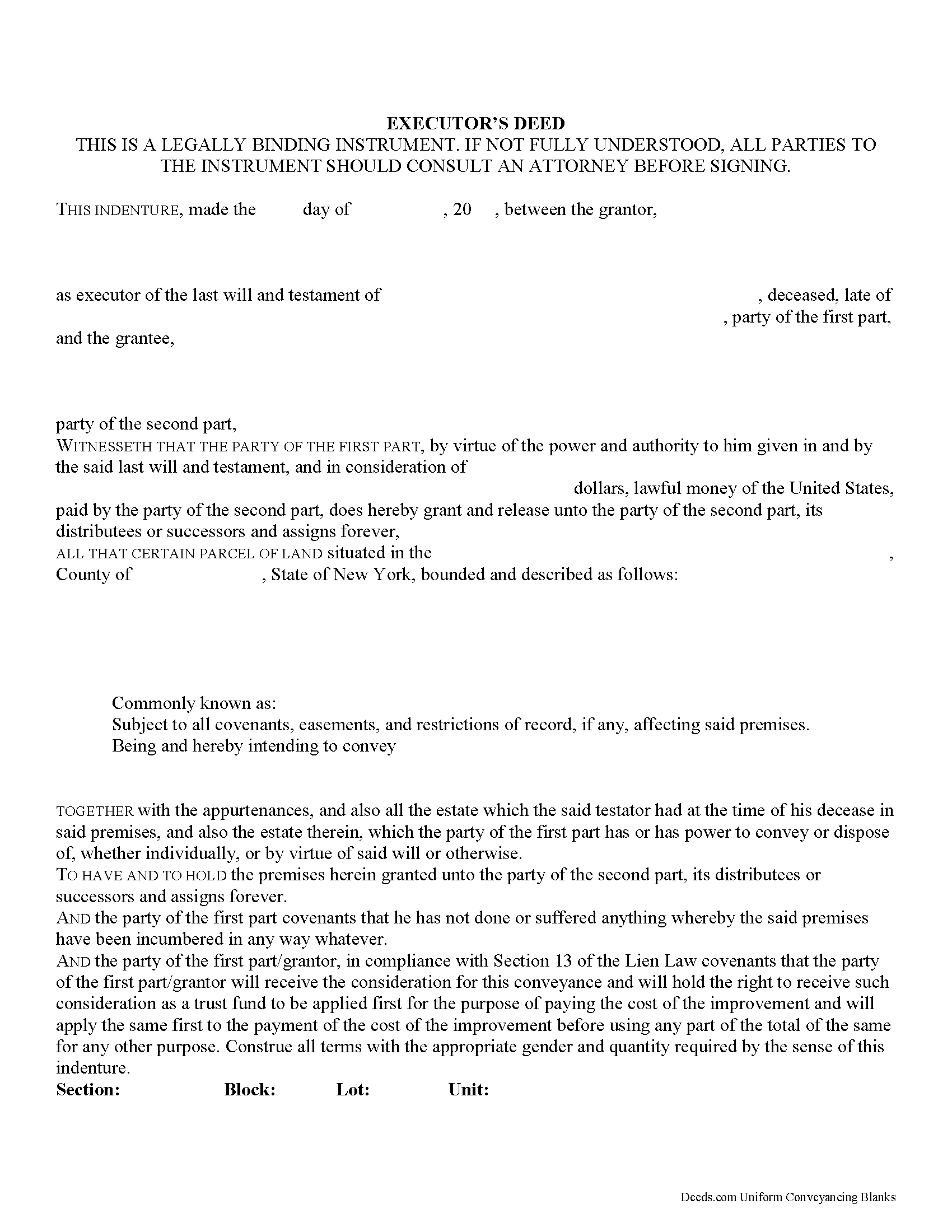
About the New York Executor Deed
How to Use This Form
- Select your county from the list
- Download the county-specific form
- Fill in the required information
- Have the document notarized if required
- Record with your county recorder's office
What Others Like You Are Saying
"Great experience. Easy."
"Found the form I needed easily and will continue to use the site."
"Easy to use, clear instructions. Perfect for what we needed."
"New customer....submitted 2 packages for erecording....very easy to do and good price....still waiti…"
"Excellent service and professionalism"
4.8/5 from 4,828 reviews. Read all
Transferring New York Real Property with an Executor's Deed
Executor's deeds are used to transfer title to real property whose owner died testate (with a last will and testament.)
The executor is someone named to carry out the provisions contained within in a deceased individual's will. After the will is admitted to probate in the Surrogate's Court, the surrogate (the judge managing the case) authorizes the executor to begin his/her duties. Frequently, these include using an executor's deed to sell the decedent's real estate.
Executor's deeds contain the same information as warranty or quitclaim deeds, but they also include details about the executor and the deceased owner. The executor's signature must be notarized, but some cases may require a witness to sign the deed in front of the notary, too. Note that at sections 309-a and 309-b, New York's Real Property Law (RPP) sets out specific notary statements based on whether the deed is signed inside or outside the state.
In addition to the standard state and local forms that accompany deeds submitted for recording, executors might also need to attach letters testamentary from the Surrogate's Court, certified copies of the decedent's death certificate and will, and other supporting documentation as appropriate.
Probate procedures can be complicated, and each situation is unique. Seek assistance from an attorney or from the surrogate responsible for the case with any questions about this process.
(New York Executor Deed Package includes form, guidelines, and completed example)
Important: County-Specific Forms
Our executor deed forms are specifically formatted for each of the 62 counties in New York.
After selecting your county, you'll receive forms that meet all local recording requirements, ensuring your documents will be accepted without delays or rejection fees.