Ohio Quitclaim Deed (Interspousal)
County Specific Legal Forms Validated as recently as October 21, 2026 by our Forms Development Team
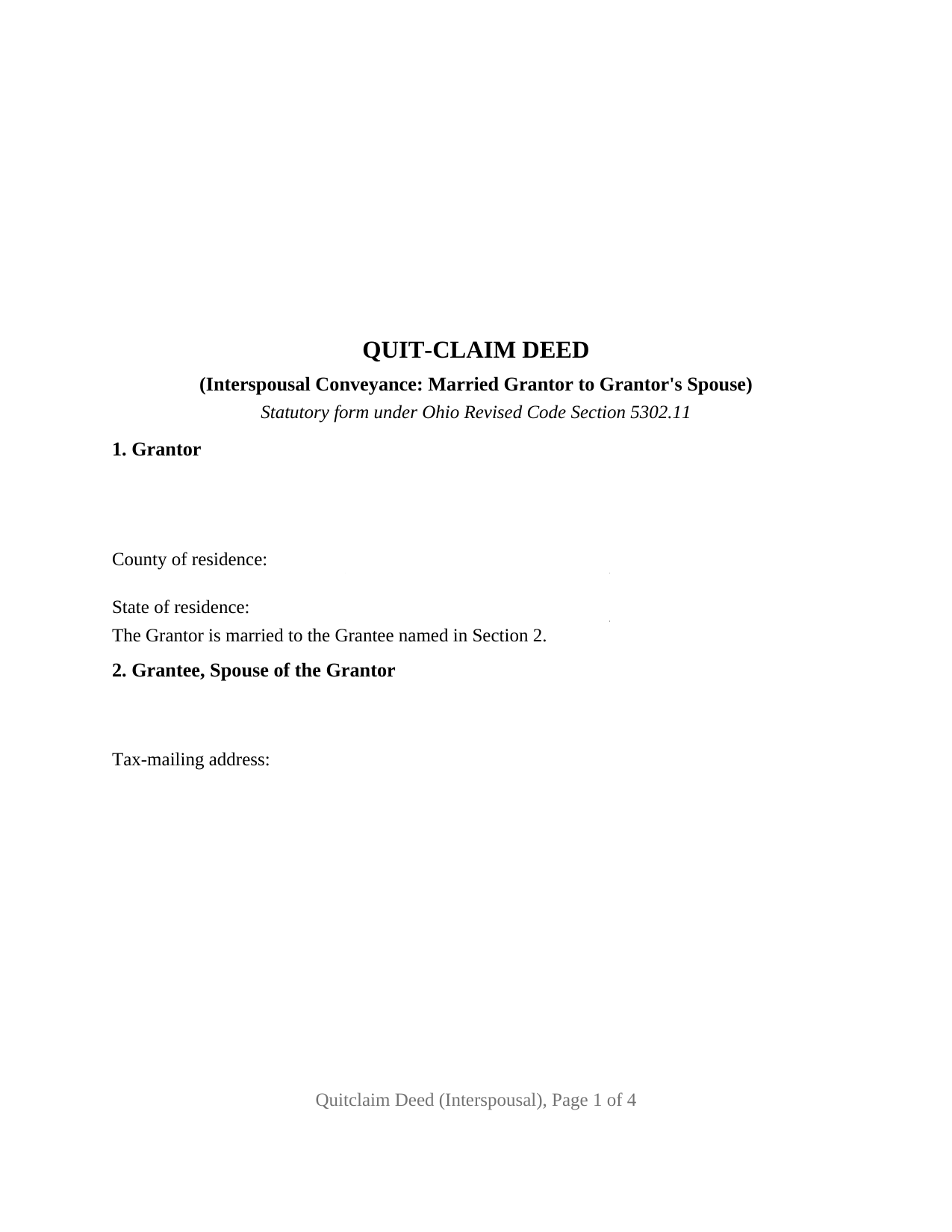
About the Ohio Quitclaim Deed (Interspousal)
How to Use This Form
- Select your county from the list
- Download the county-specific form
- Fill in the required information
- Have the document notarized if required
- Record with your county recorder's office
What Others Like You Are Saying
"great forms, nice that they are fillable pdfs, easy to use, no issues. thanks."
"Fantastic way to record any deed! Done in less than a few hours, right to your inbox. Very small fee…"
"Everything I needed plus more. Great service!!!"
"These forms worked fantastic!"
"Yes I received the forms downloaded them and the example is very helpful as I have not used this for…"
4.8/5 from 4,833 reviews. Read all
On most Ohio deeds from a married owner, the release of dower is a second person's signature. On a deed between spouses it is not: the spouse whose dower attaches to the grantor's title is the one receiving the property. This form is set up for that record, a married grantor conveying Ohio real property to the grantor's own spouse under Ohio Revised Code Section 5302.11, with one signature line, one certificate, and a numbered dower release running toward the grantee.
The release that points at the grantee
Ohio still keeps dower. Under Section 2103.02 a married owner's spouse holds a one third life estate in property the owner was seized of as an estate of inheritance during the marriage, unless that spouse relinquished it or is barred, and the interest attaches even where the deed carries one name. The statutory quit-claim form answers dower with a release sentence printed for the grantor's spouse to sign. On an interspousal conveyance that sentence has nowhere else to go, since the grantor's spouse is the grantee: Section 10 states the release grantor to grantee, and no third signature or second certificate appears. Dower runs both ways, so the release also reaches the mirror image interest arising in the grantor once the grantee holds title.
What a quitclaim moves between spouses
The operative words belong to the statute. Section 5302.11 gives a deed following its form the effect of a fee simple conveyance carrying no covenant of any kind from the grantor, and Section 5302.03 says the word grant implies no covenant. The grantee takes the interest as it stands: a recorded mortgage keeps encumbering the property, and the note obligation stays with whoever signed the note. Section 5302.01 makes the statutory forms alterable as circumstances require, the authority for printing the dower sentence in the interspousal direction. Searches for a quit claim deed, the hyphenated quit-claim spelling the Revised Code uses, or an interspousal transfer deed reach this one.
One grantor, one grantee, and the marriage between them
The form recites exactly one grantor and one grantee who are married to each other. Section 1 states the grantor's name, residence, and the marriage to the grantee; Section 2 heads the grantee entry as the spouse of the grantor and takes that spouse's tax-mailing address. A spouse who bought an Ohio house before the wedding and moves it into the other spouse's name alone, and one who took title by inheritance and conveys to the other spouse, present the record this deed recites. Its edges: one grantee means no joint lives and remainder to the survivor language from Section 5302.17, and one signer means every blank below the conveyance belongs to the grantor and the notarial officer.
A gift between spouses at the auditor's window
Ohio deeds answer to the county auditor before the county recorder, and the fee arithmetic is where a spousal transfer parts company with a sale. Section 319.54(G)(3) has the auditor charge ten cents per hundred dollars of value and lists the exemptions, among them (d), a conveyance to evidence a gift, in trust or otherwise and whether revocable or irrevocable, between husband and wife. Form DTE 100EX carries that line as item (d) and calls for an affidavit of facts alongside it; those auditor filings are prepared separately and are not part of this package. Section 322.01 keeps an exempt instrument outside the county permissive transfer tax, and Section 317.22 holds the deed back from the record until the auditor's stamp and transfer endorsement appear on it.
The page geometry answers Section 317.114: page one keeps its top three inches clear for the recorder's endorsement, the sides and bottom hold an inch, later pages open an inch and a half down, and the print sits above 10 point. A covered instrument missing those numbers is not turned away; the recorder accepts it and collects twenty dollars more. Section 319.20 accounts for two further entries, the address for the grantee's tax bills and the reference identifying the instrument through which the grantor claims title, and Section 317.111 for the preparer statement.
The download holds three items: the interspousal Ohio quitclaim deed as a fillable PDF, a completed example for a Cuyahoga County conveyance between spouses, and a plain language guide covering the numbered sections, the dower mechanics, the ownership forms an Ohio grantee may take, and the recording path. The materials describe Ohio law and this form in general terms; they are not legal advice.
Important: County-Specific Forms
Our quitclaim deed (interspousal) forms are specifically formatted for each of the 88 counties in Ohio.
After selecting your county, you'll receive forms that meet all local recording requirements, ensuring your documents will be accepted without delays or rejection fees.