Rhode Island Quitclaim Deed (Corrective)
County Specific Legal Forms Validated as recently as September 7, 2026 by our Forms Development Team
About the Rhode Island Quitclaim Deed (Corrective)
How to Use This Form
- Select your county from the list
- Download the county-specific form
- Fill in the required information
- Have the document notarized if required
- Record with your county recorder's office
What Others Like You Are Saying
"Well, we are 10 days from leaving the country for months and needed to notarize and record deed chan…"
"Excellent service!"
"The directions were clear, I typed the deed out and it was successfully recorded and mailed back to …"
"5 stars"
"Excellent service!!!!! A 5STAR"
4.8/5 from 4,833 reviews. Read all
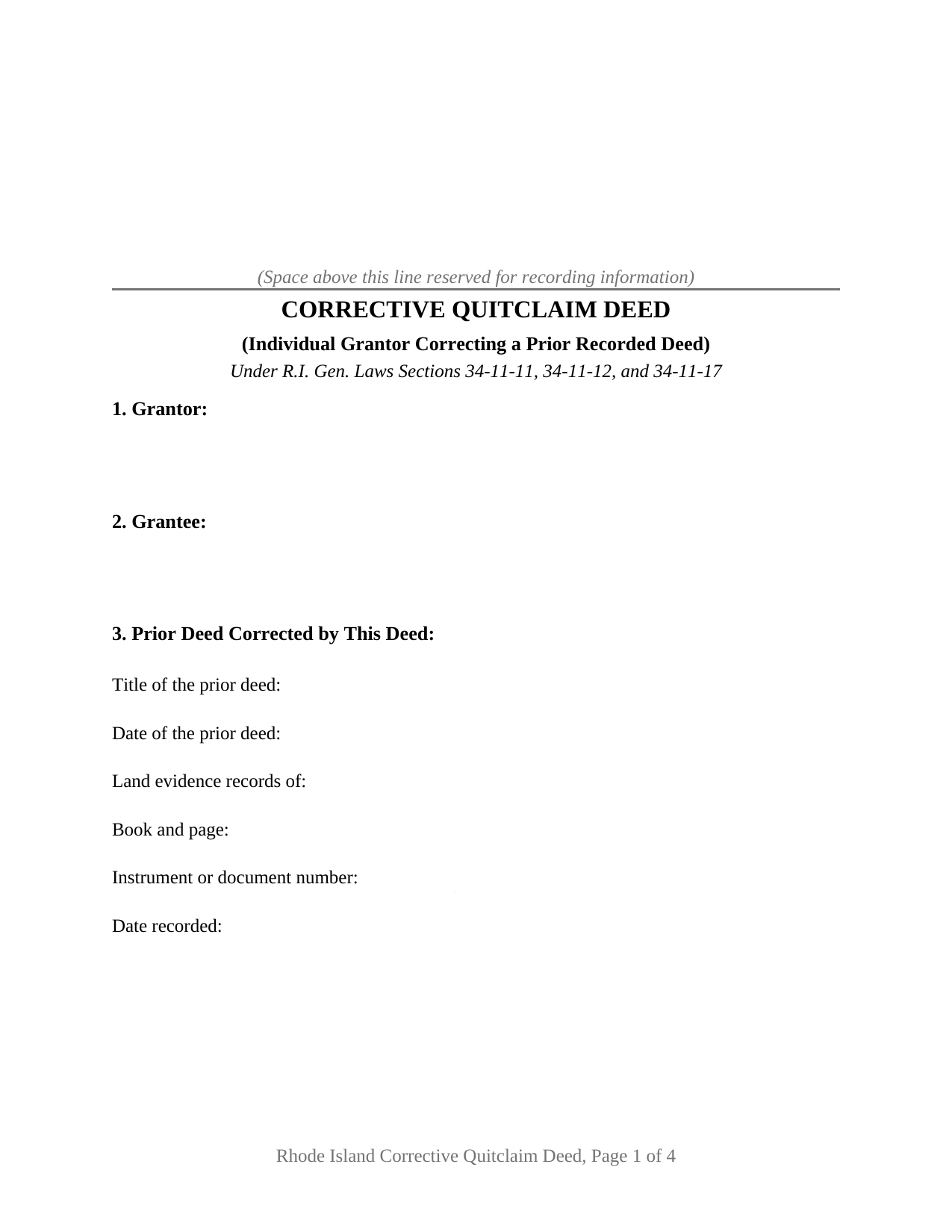
Most deeds describe land. This one spends three of its sections describing another deed. A Rhode Island corrective quitclaim deed is signed by the grantor who signed an instrument already on record, and it does three things at once: it identifies that earlier deed, states the error in it and the corrected language, and grants the property to the same grantee again with the statutory quitclaim covenants.
A correction with no statute of its own
Rhode Island has no correction deed statute. Nothing in Title 34 defines a corrective or confirmatory deed or offers a scrivener's affidavit for a clerical slip. What Chapter 34-11 offers instead is permission: Section 34-11-11 provides that the statutory forms may be used, may be altered as circumstances require, and are not exclusive. That is the authority for a deed carrying identification, error, and correction paragraphs alongside statutory conveyancing language, and this one is built on the quitclaim deed of Section 34-11-12, whose operative words have the grantor, for consideration paid, grant to the grantee with quitclaim covenants.
Both instruments stay in the record
A correction adds a document; it withdraws nothing. The earlier deed keeps its book, its page, and its index entry, and the two are read together, which is why Sections 3, 4, and 5 put the recording reference, the mistake, and the repair on the face of the new deed. In re Barnacle shows what rides on that reading, holding that an instrument with a technical deficiency can still give constructive notice where it sits in the chain of title and furnishes a clue to the identity of the land affected. Section 34-11-36 offers a slower cure for one defect alone: an acknowledgment on a recorded conveyance is construed valid after ten years of record, absent a timely Superior Court challenge.
What a correction carries, and what it cannot
Mistakes reaching the land evidence records in this shape include a misspelled or incomplete party name, a transposed lot or plat number, an omitted recording reference, and a defect in the acknowledgment certificate. A change that would substitute a different grantee, add or drop a party, or move a boundary is a fresh conveyance rather than a repair, and it takes the tax treatment of the transaction it actually is. A disputed meaning is Superior Court work, the forum Section 34-11-36 itself contemplates.
The covenant, and the size of the grant
Signing again means covenanting again. Section 34-11-17 gives a deed following the statutory quitclaim form the force and effect of a deed in fee simple, binding the grantor to warrant and defend against lawful claims of persons claiming by, through, or under that grantor. Section 34-11-27 passes every estate held at execution unless a different intention appears, and the operative section states that intention, holding this conveyance to the estate the earlier deed conveyed.
One grantor signs again
The form recites exactly one grantor, an individual signing personally and in an individual capacity, with a printed name line beneath the signature for Section 34-11-1.1 and a single acknowledgment certificate carrying the substance Section 34-12-1 describes. The grantee named in Section 2 is the person who took under the earlier deed, so the instrument runs between the same two parties. Situations presenting this configuration include a seller repairing the spelling of a buyer's name discovered at the next closing, and an owner supplying a plat reference a description left out. Structures this deed does not carry include two record owners signing together and a trustee, corporate officer, or attorney in fact.
Twelve sections, one town clerk
Recording is municipal here, with no county offices in the state, so the corrective instrument goes to the clerk holding the deed it corrects. Section 34-13-7 sets eighty dollars for a quitclaim deed, a dollar per page, and a ten percent municipal records surcharge. Conveyance tax follows consideration rather than labels: nothing in the Section 44-25-2 exemptions turns on a deed being corrective, and a correction on which nothing is paid carries the Section 44-25-1(c) statement that no documentary stamps are required. Searchers reach the instrument as a correction deed, a deed of correction, or a scrivener's error deed.
The download holds three files: the blank deed as a fillable PDF, a completed example worked through a Narragansett correction of a grantee's name, and a plain language guide covering the twelve numbered sections, the acknowledgment, and municipal recording. These materials describe Rhode Island law at a general level and are informational only, not legal advice.
Important: County-Specific Forms
Our quitclaim deed (corrective) forms are specifically formatted for each of the 5 counties in Rhode Island.
After selecting your county, you'll receive forms that meet all local recording requirements, ensuring your documents will be accepted without delays or rejection fees.