Virginia Transfer on Death Beneficiary Affidavit
County or Independent City Specific Legal Forms Validated as recently as October 9, 2026 by our Forms Development Team
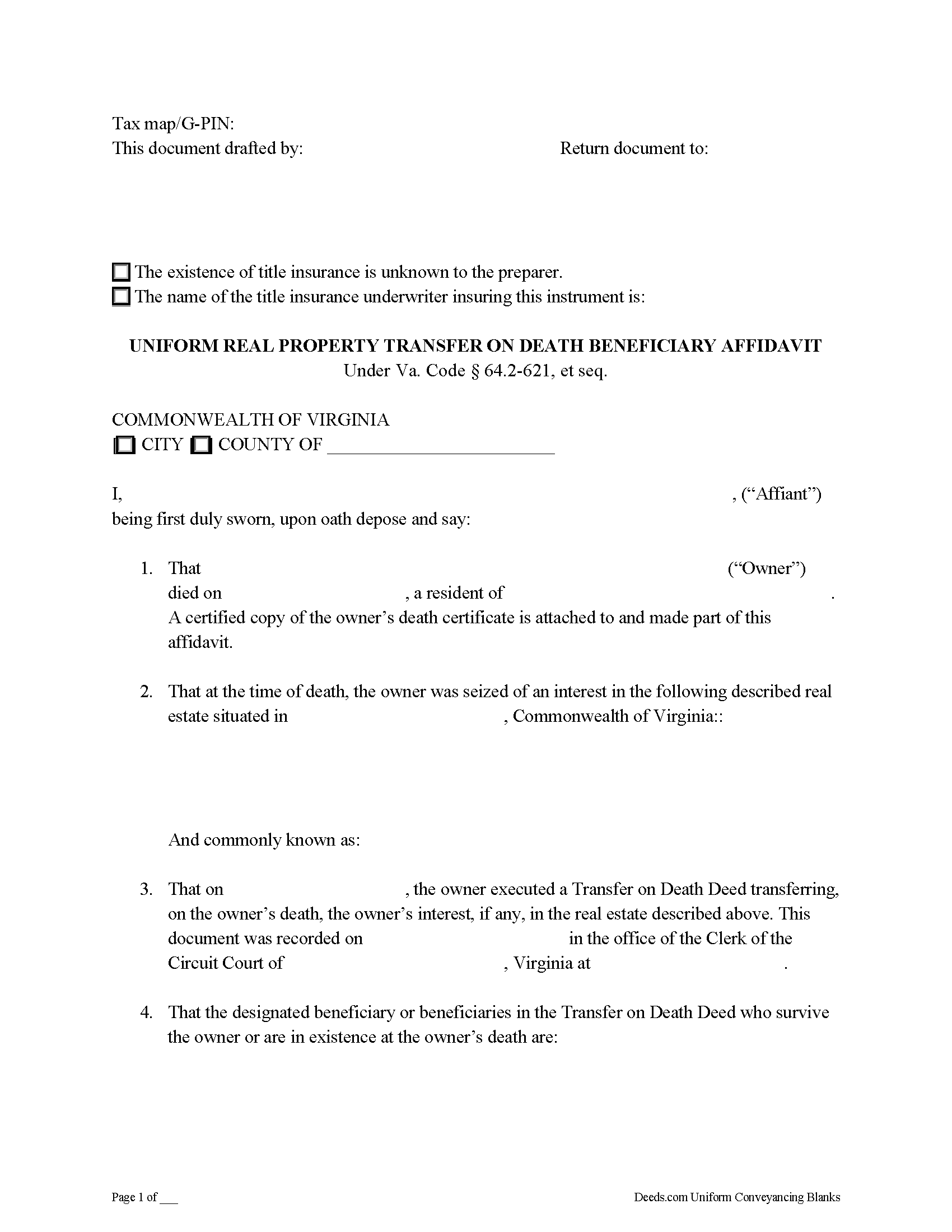
About the Virginia Transfer on Death Beneficiary Affidavit
How to Use This Form
- Select your county or independent city from the list
- Download the county or independent city-specific form
- Fill in the required information
- Have the document notarized if required
- Record with your county or independent city recorder's office
What Others Like You Are Saying
"I am an attorney who was trying to draft some deeds in arizona. The deed templates coupled with the …"
"As advertised. good value."
"My goal was to find the Covenant, Conditions, and Restrictions for my HOA. From what I can read, the…"
"Fast service done well"
"It would be good to be able to print several documents at 1 time by highlighting them in the list wi…"
4.8/5 from 4,823 reviews. Read all
On July 1, 2013, Virginia enacted the Uniform Real Property Transfer on Death Act, codified at VA Code 64.2-621 et seq. (2012).
While the statutes contain suggested forms for the actual transfer on death deeds and associated revocations, the specifics for completing the transfer after the owner dies are less clear. In many cases, non-probate transfers of real property happen "as a function of law." In theory, this means there is no need for the beneficiary to act -- the named owner of the property automatically changes. In practice, however, it benefits the interests of all parties involved to formalize the updated status as soon as reasonably possible, especially since the beneficiary has the right to disclaim the conveyed interest.
One efficient method for stating the beneficiary's intent to accept the real estate is to execute and record an affidavit, which is a document containing statements made under oath. The affidavit should, at minimum, include:
1. The parties named in the transfer on death deed;
2. Residency and death information about the deceased owner;
3. Recording details for the transfer on death deed;
4. A description of and property ID for the real property being transferred;
5. Official copies of any necessary death certificates; and
6. Anything else required by the local agency responsible for recording and maintaining land records. In Virginia, this is typically the office of the clerk of the circuit court.
By recording such an affidavit, the beneficiary provides notice to the public of the change in ownership of the property. This is important because it helps to maintain a clear chain of title, or sequential record of owners. A clear chain of title will simplify future sales or mortgages of the property, since it indicates a reduced chance of unexpected claims against present or future owners.
Each situation is unique, so for specific advice, or to resolve more complex issues, contact a local real estate attorney.
(Virginia TOD Beneficiary Affidavit Package includes form, guidelines, and completed example)
Important: County or Independent City-Specific Forms
Our transfer on death beneficiary affidavit forms are specifically formatted for each of the 132 county or independent cities in Virginia.
After selecting your county or independent city, you'll receive forms that meet all local recording requirements, ensuring your documents will be accepted without delays or rejection fees.