New York Revocation of Transfer on Death Deed
County Specific Legal Forms Validated as recently as October 6, 2026 by our Forms Development Team
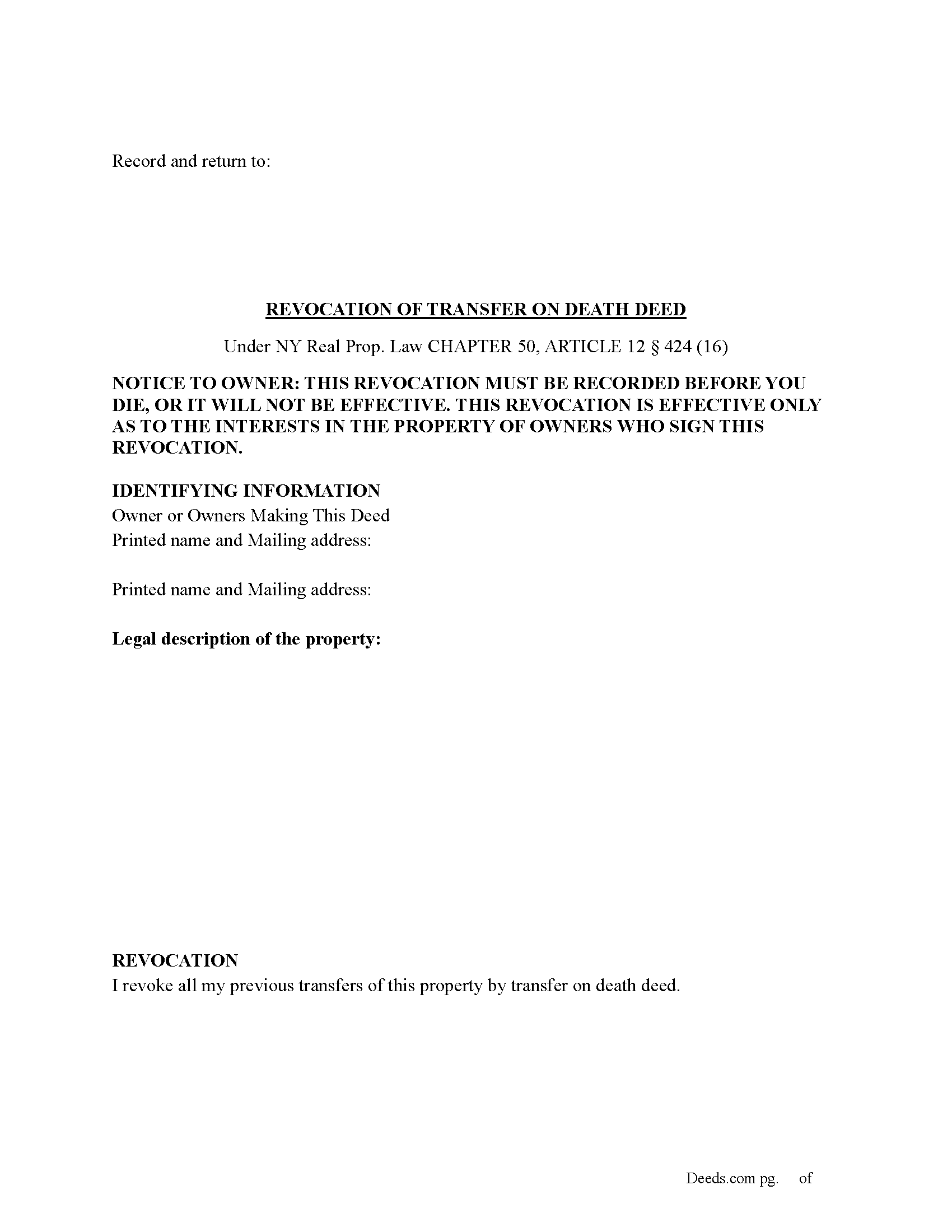
About the New York Revocation of Transfer on Death Deed
How to Use This Form
- Select your county from the list
- Download the county-specific form
- Fill in the required information
- Have the document notarized if required
- Record with your county recorder's office
What Others Like You Are Saying
"Easy and efficient service. The communication is on point. Thank you!"
"Thank you it was hard for me to pull these documents online you been a big help since I am in a diff…"
"Very intuitive to use and comprehensive enough for the most complex of cases."
"These forms worked fantastic!"
"easy to use website."
4.8/5 from 4,817 reviews. Read all
(How do I revoke the TOD deed after it is recorded?
There are three ways to revoke a recorded TOD deed:
(1) Complete and acknowledge a revocation form and record it in each county where the property is located.
(2) Complete and acknowledge a new TOD deed that disposes of the same property and record it in each county where the property is located.
(3) Transfer the property to someone else during your lifetime by a recorded deed that expressly revokes the TOD deed. You may not revoke the TOD deed by will.) (Real Property (RPP) CHAPTER 50, ARTICLE 12 § 424(15))
Execution of Revocation: The revocation must be executed (signed) by the property owner in the presence of two witnesses and a Notary Public, similar to how the original TOD deed was executed.
Recording the Revocation: The revocation (whether via a new TOD deed or a revocation form) must be recorded in the County Clerk's office where the property is located, just like the original TOD deed. If the revocation is not recorded, it will not be valid.
Retain Control Until Revoked: The property owner retains full control over the property and can revoke the TOD deed at any time during their lifetime. However, after the owner's death, the TOD deed takes effect and cannot be revoked.
Important Considerations: Beneficiary Consent- The property owner does not need the consent of the beneficiary to revoke the TOD deed.
Automatic Revocation by Sale: If the property owner sells or transfers the property during their lifetime, this will also effectively revoke the TOD deed.
Important: County-Specific Forms
Our revocation of transfer on death deed forms are specifically formatted for each of the 62 counties in New York.
After selecting your county, you'll receive forms that meet all local recording requirements, ensuring your documents will be accepted without delays or rejection fees.