California Quitclaim Deed (Reserving Life Estate)
County Specific Legal Forms Validated as recently as October 22, 2026 by our Forms Development Team
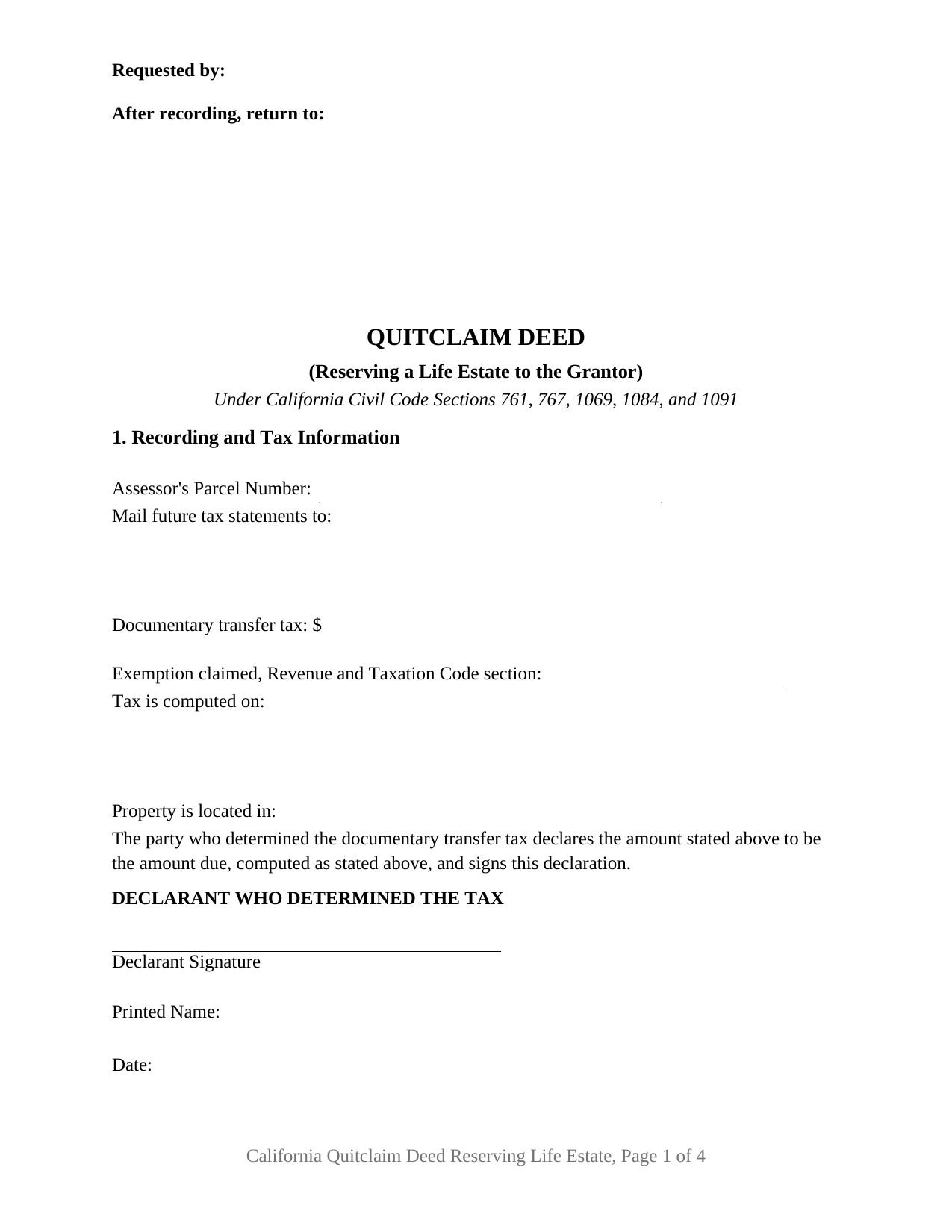
About the California Quitclaim Deed (Reserving Life Estate)
How to Use This Form
- Select your county from the list
- Download the county-specific form
- Fill in the required information
- Have the document notarized if required
- Record with your county recorder's office
What Others Like You Are Saying
"Absolutely the easiest and fastest service ever!!! staff very helpful."
"I liked the speed and efficiency of your website."
"Your website was very helpful & easy to use"
"These forms worked fantastic!"
"This was the simplest method of filing a document that I've ever encountered. I've already recommend…"
4.8/5 from 4,836 reviews. Read all
Most deeds hand an interest to someone else and stop there. This one divides time rather than parties: the grantor keeps possession for a lifetime, and the interest beginning afterward moves now, on the same page. The deed drafted here works that way on purpose: a single grantor quitclaims to the grantees it names, holds back a life estate, and warrants nothing about the title.
Two Estates Out of One Page
California classifies estates by how long they last, and Civil Code Section 761 lists estates for life among them. Section 767 supplies the other half: a future estate may commence in possession at a future day, on the termination of a precedent estate created at the same time. The reserved life estate is that precedent estate, born in the same instrument as the interest following it. Naming grantees matters for a reason Section 768 makes plain: a reversion is the residue an estate leaves in the grantor by operation of law, while named remaindermen hold the future interest themselves, and Section 699 treats it as property from the start.
The Reservation Has to Be Said Out Loud
Civil Code Section 1084 transfers all of a thing's incidents unless they are expressly excepted, which is why the operative section states the exception in express words rather than trusting implication. Once stated, it reads in the grantor's favor under Section 1069, which interprets a grant for the grantee but a reservation for the grantor. Nothing else is promised. California's two everyday deed covenants arise under Section 1113 from a single statutory word, and a quitclaim, often typed as a quit claim deed, does not use it, so what crosses is the interest held at delivery and title reaching the grantor later stays behind.
Life Tenant and Remaindermen, Side by Side
Statute sets the terms of that coexistence. Under Civil Code Section 818 the owner of a life estate may use the land as an owner in fee simple would, except that the life tenant must do no act to the injury of the inheritance. Section 826 answers from the other direction, letting a holder of a remainder or reversion sue for injury to the inheritance despite the intervening estate. Neither side holds the whole, so a later sale of the entire fee gathers every signature.
The Configuration, and the Patterns That Present It
The form recites one grantor, an individual signing personally, with one signature line and one Civil Code Section 1189 acknowledgment certificate headed by the boxed identity notice that section prints on certificates taken in this state. Section 5 states the measuring life, most often the grantor's own; Section 766 recognizes an estate measured by a third person's life, which that blank also accommodates. Section 3 names the remaindermen with a vesting entry for how they hold the remainder among themselves, and Section 686 supplies a tenancy in common where the entry states no form. Grantees do not execute a quitclaim, so no remainderman signs. Patterns of this kind fill California's grantor indexes: an owner passing the remainder in a longtime residence to adult children while keeping the right to live there, a parcel whose remainder moves to a buyer who waits out the seller's occupancy, and a deed measured by another person's life. A conveyance reserving nothing, and a deed carrying two record owners, present structures outside these blocks.
Where a Reserved Estate Changes the Tax Answer
Transfer tax runs on the interest conveyed, and family transfers of a remainder often enter a code section instead of a dollar figure; the example claims Revenue and Taxation Code Section 11930, reaching a conveyance by inter vivos gift or by reason of a death, on the first page lines Sections 11932 and 11933 call for. Property tax follows its own rule, which is why the word reserve carries weight here. Section 62(e) keeps a transfer out of change in ownership where the instrument reserves an estate for life to the transferor, and makes termination of that estate a change in ownership; Property Tax Rule 462.060 states the same sequence for assessors.
Three files ship: the fillable deed, a completed example worked through a Humboldt County transfer of a remainder to two family members, and a plain language guide covering every numbered section, the certificate, the recording fees, and what a recorder checks at intake. The materials state what California law provides in general terms and are not legal advice about a particular parcel, family, or reserved estate.
Important: County-Specific Forms
Our quitclaim deed (reserving life estate) forms are specifically formatted for each of the 58 counties in California.
After selecting your county, you'll receive forms that meet all local recording requirements, ensuring your documents will be accepted without delays or rejection fees.