Kansas Release of Affidavit of Equitable Interest
County Specific Legal Forms Validated as recently as October 15, 2026 by our Forms Development Team
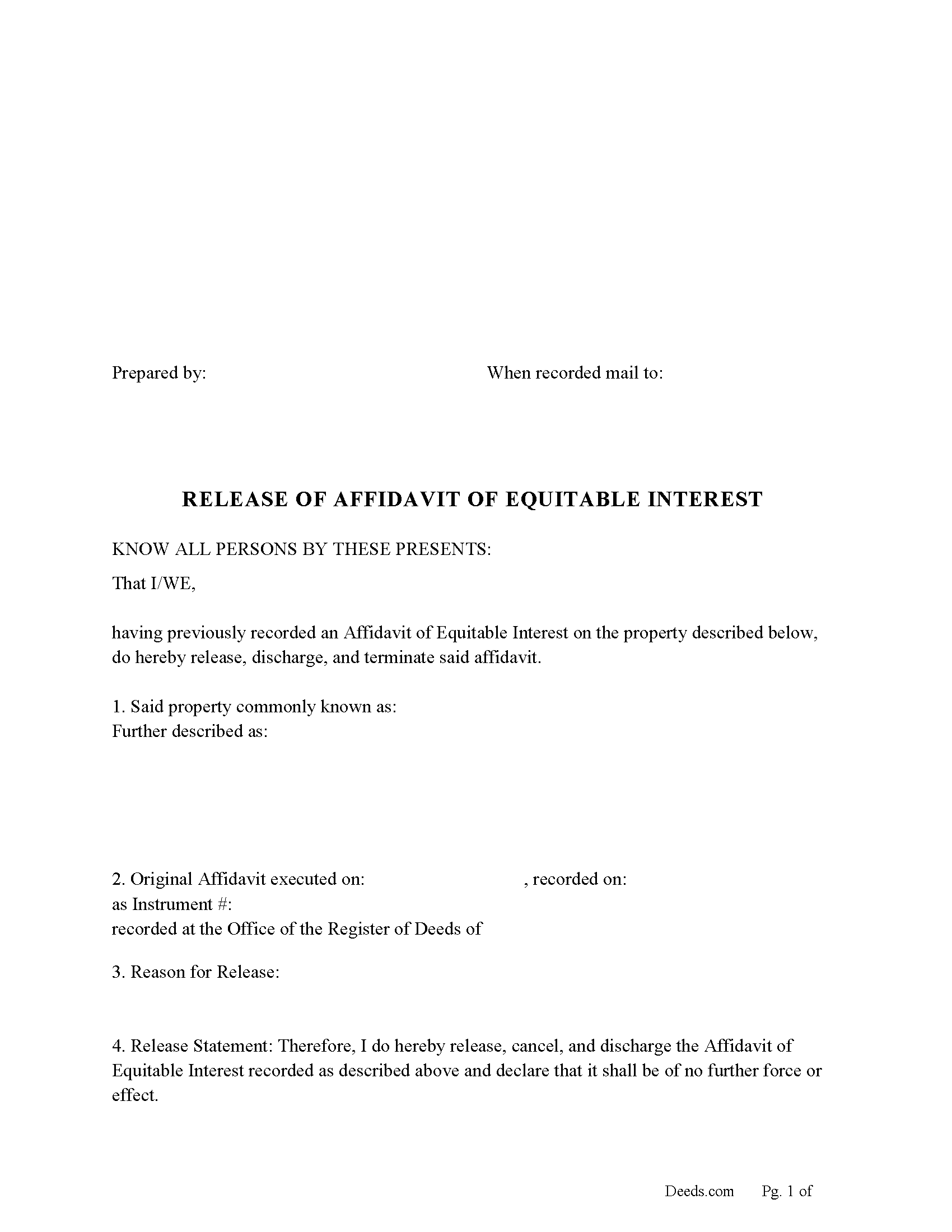
About the Kansas Release of Affidavit of Equitable Interest
How to Use This Form
- Select your county from the list
- Download the county-specific form
- Fill in the required information
- Have the document notarized if required
- Record with your county recorder's office
What Others Like You Are Saying
"I filled out the deed, had it notarized, and recorded. No problems. I put this off for so long. Once…"
"Thanks so much for all your help! That was painless."
"Good experience - Just what I needed"
"Always helpful!"
"It was easy to find what I was looking for. The instructions were easy to follow. The example given …"
4.8/5 from 4,828 reviews. Read all
A Release of Affidavit of Equitable Interest is a recorded document used to formally cancel and remove an Affidavit of Equitable Interest from public land records. Its purpose is to clear title, remove encumbrances, or reflect that a buyer’s equitable interest in a property is no longer valid or active.
Here are some common uses for a Release of Affidavit of Equitable Interest in Kansas
1. Contract for Deed Has Been Fully Satisfied
The buyer has completed all payment obligations.
Legal title has been conveyed via deed.
Recording the release helps avoid confusion over any lingering claims.
2. Buyer Defaults on the Contract
The buyer stops making payments or otherwise breaches the contract.
Seller may record a release after giving proper notice (often 15 days as per K.S.A. 58-5202).
Clears title so the seller can resell or refinance the property.
3. Mutual Termination or Cancellation
Both parties agree to cancel the contract for deed.
Buyer relinquishes their equitable interest voluntarily.
Recording the release helps prevent future title disputes.
4. Buyer Has Vacated or Abandoned the Property
If the buyer walks away from the contract/property.
Seller can document the release and proceed with possession or resale.
5. Affidavit Was Filed in Error or No Longer Applicable
For example, the affidavit was mistakenly recorded or based on an unenforceable agreement.
Recording a release corrects the official land records.
6. Court Order or Settlement
A judge may order a release as part of a quiet title action or dispute resolution.
May also follow mediation, divorce, or estate settlement involving the property.
7. Clearing Title for Sale, Refinance, or Transfer
Lenders and title companies often require the release to be recorded before issuing a loan or insurance.
Ensures the property appears free of competing claims in title searches.
Recording the Release of Affidavit of Equitable Interest protects the seller, the buyer, and any third party (like a lender or future purchaser) by ensuring the public land records accurately reflect the current legal and equitable interests in the property.
Important: County-Specific Forms
Our release of affidavit of equitable interest forms are specifically formatted for each of the 105 counties in Kansas.
After selecting your county, you'll receive forms that meet all local recording requirements, ensuring your documents will be accepted without delays or rejection fees.