Kansas Contract for Deed
County Specific Legal Forms Validated as recently as October 12, 2026 by our Forms Development Team
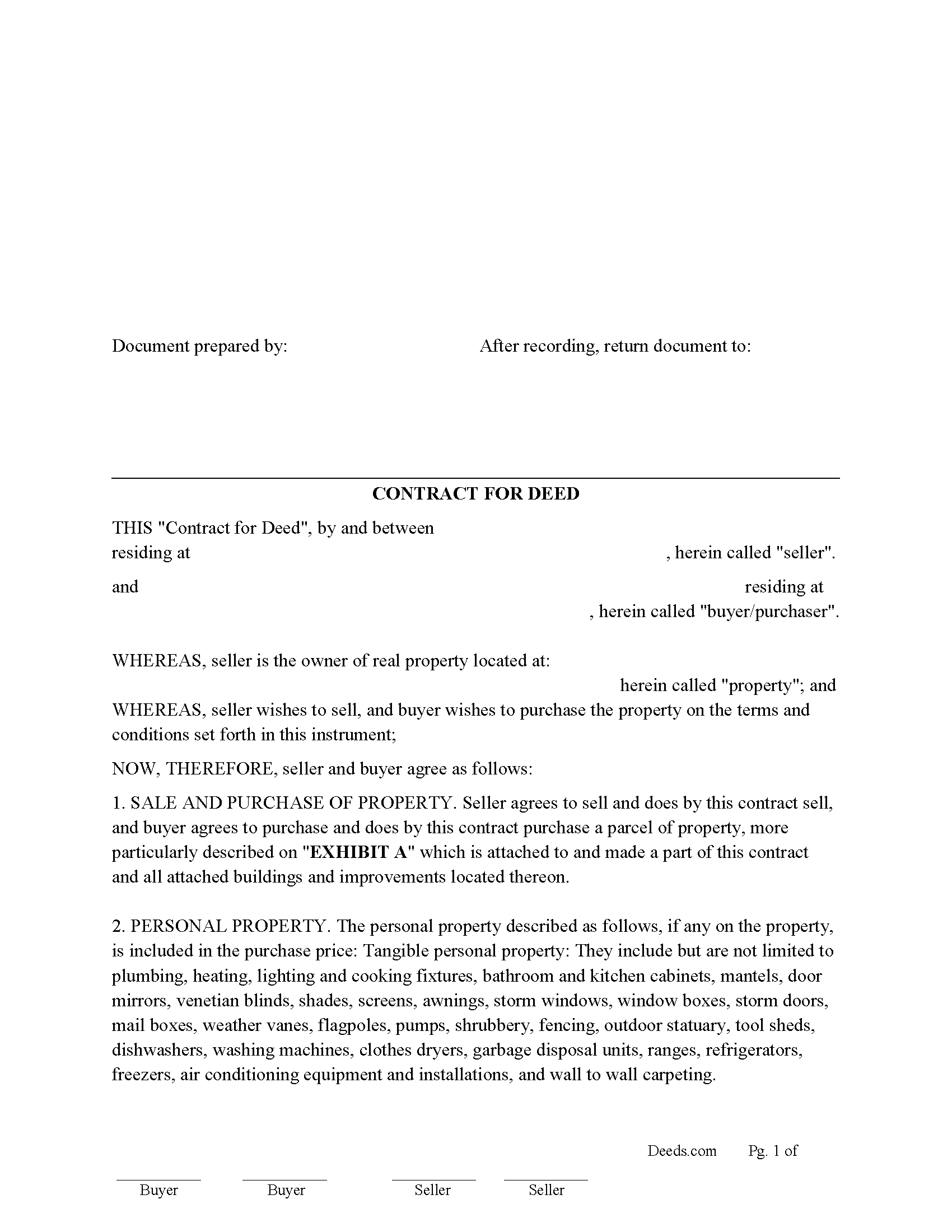
About the Kansas Contract for Deed
How to Use This Form
- Select your county from the list
- Download the county-specific form
- Fill in the required information
- Have the document notarized if required
- Record with your county recorder's office
What Others Like You Are Saying
"Fabulous service team. VERY responsive with any issue I encountered. Preparing forms out of state to…"
"Wow! So much simpler & faster than I had expected. I had thought it would take weeks to get file…"
"It was so easy to use the site and got recording done in a day. Very happy with experience."
"Was a little frustrated first using your site, but due to my mental state, I expected that! Got what…"
"Good."
4.8/5 from 4,836 reviews. Read all
A "Contract for Deed," sometimes referred to as a Land Contract is a legal agreement in which the buyer of a property agrees to pay the seller the purchase price over a period of time. During this period, the buyer has possession of the property, but the seller retains legal title to the property until the full purchase price is paid.
Recording the Contract: In Kansas, it's usually a good idea to record the contract for deed or an Affidavit of Equitable Interest with the county register of deeds. This ensures public notice of the buyer's interest in the property and protects against subsequent claims.
Foreclosure Process: If the buyer defaults on a contract for deed, the seller may need to go through a judicial foreclosure process to regain possession of the property. Kansas law will specify the procedure, notice requirements, and redemption rights.
Equitable Title: Under a contract for deed, the buyer often holds equitable title to the property, meaning they have a right to obtain full legal title once the contract terms are fulfilled. However, until then, the legal title remains with the seller.
Rights and Obligations: The contract should clearly outline the rights and responsibilities of both the buyer and the seller, including payment schedules, property maintenance, tax obligations, and insurance.
Default and Acceleration Clauses: Contracts for deed commonly contain clauses that detail what constitutes a default and what happens in such a scenario, including the possibility of an acceleration clause which demands full payment upon default.
Annual Accounting Statement
Principal and Interest Breakdown: The statement should clearly show how much of the buyer's payments have been applied toward the principal balance of the property and how much has gone toward interest.
Remaining Balance: It should indicate the remaining balance of the principal after the year's payments have been applied.
Payment History: The statement might include a summary of the payments made during the year, including dates and amounts.
Taxes and Insurance: If the seller is responsible for paying property taxes and insurance from the buyer's payments (common in escrow arrangements), the statement should detail these payments.
Late Fees or Penalties: If any late fees or penalties were incurred during the year, these should also be documented.
Escrow Account Balance: If there is an escrow account associated with the contract, the statement should include the current balance of this account.
Legal Compliance: Ensure that the Annual Accounting Statement complies with any relevant Kansas laws and the specific terms of your Contract for Deed.
79-1437c. Real estate sales validation questionnaires;
required to accompany transfers of title; retention time; use of information. No deed or instrument providing for the transfer of title to real estate or affidavit of equitable interest in real estate shall be recorded in the office of the register of deeds unless such deed, instrument or affidavit shall be accompanied by a real estate sales validation questionnaire completed by the grantor or grantee or the agent of such grantor or grantee concerning the property transferred.
(Kansas Contract for Deed Package includes form, guidelines, completed example and sales validation questionnaire) For use in Kansas only.
Important: County-Specific Forms
Our contract for deed forms are specifically formatted for each of the 105 counties in Kansas.
After selecting your county, you'll receive forms that meet all local recording requirements, ensuring your documents will be accepted without delays or rejection fees.