Kansas Executor Deed
County Specific Legal Forms Validated as recently as October 1, 2026 by our Forms Development Team
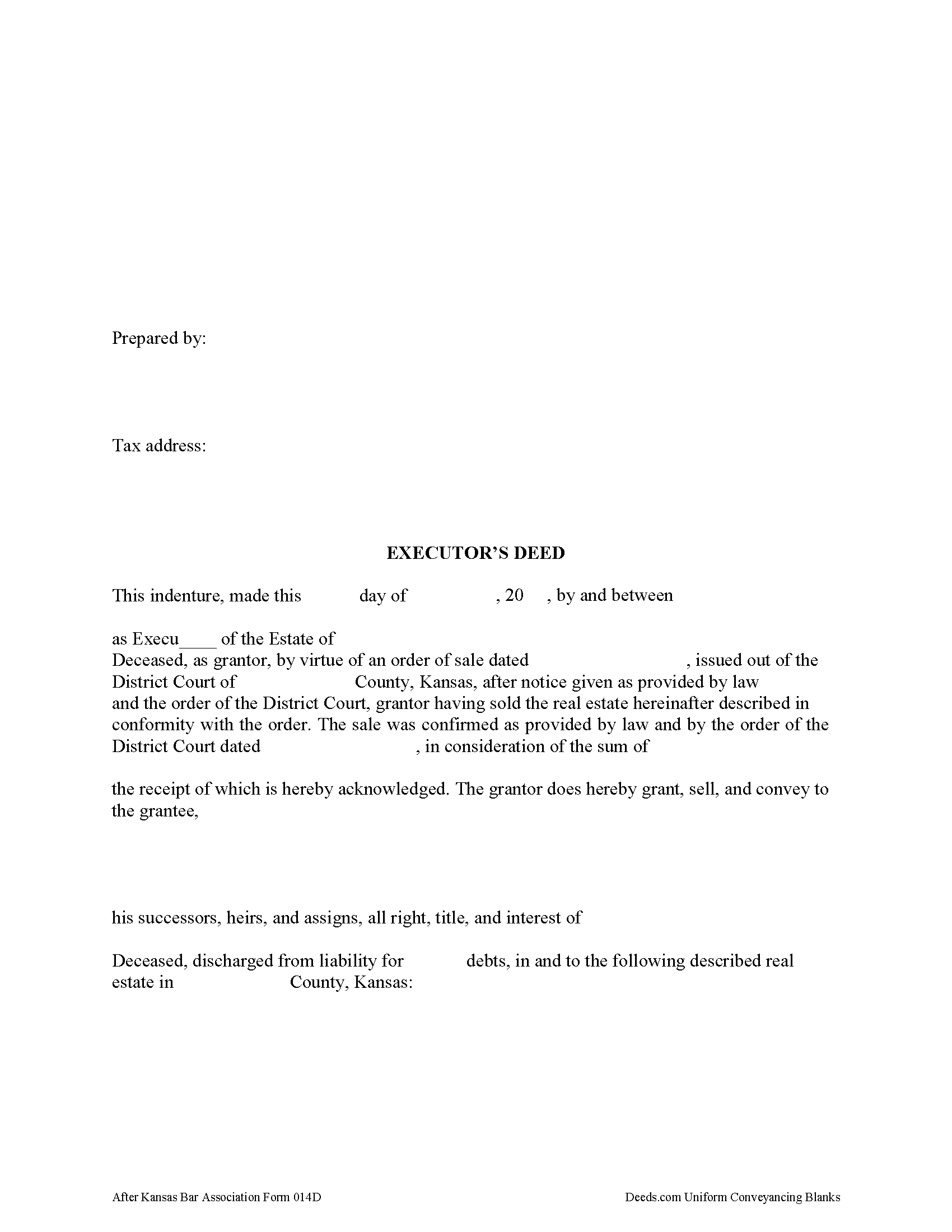
About the Kansas Executor Deed
How to Use This Form
- Select your county from the list
- Download the county-specific form
- Fill in the required information
- Have the document notarized if required
- Record with your county recorder's office
What Others Like You Are Saying
"Great website. Once submit payment documents are immediately emailed, easy to print and clear format…"
"Review: Very user friendly and that is very important to me. Quick, easy and clear instructions. I w…"
"Very easy site to use for a simple minded happy howmowner. Very reasonable fee Quick turn around Goo…"
"Thorough. Thanks!"
"So far so good!"
4.8/5 from 4,828 reviews. Read all
When the decedent dies testate (with a will) naming a personal representative (PR) of his or her estate, the PR is called an executor. An executor may need to sell the decedent's real property to raise money to pay the estate's debts or for other reasons in the best interest of the estate.
If the decedent's will includes a power of sale, a simple executor's deed may be used to convey real property from the estate. The deed requires a recitation of facts concerning the executor, the decedent, and the subject property being transferred, and must be signed in the presence of a notary public and is subject to requirements for conveyances of real property in Kansas.
Supplemental documentation, such as a real estate sales validation questionnaire, may be required, depending on the transfer. Consult a lawyer with questions about estate administration in Kansas.
(Kansas Executor Deed Package includes form, guidelines, and completed example)
Important: County-Specific Forms
Our executor deed forms are specifically formatted for each of the 105 counties in Kansas.
After selecting your county, you'll receive forms that meet all local recording requirements, ensuring your documents will be accepted without delays or rejection fees.