Ohio Fiduciary Deed (Entity Grantee)
County Specific Legal Forms Validated as recently as October 24, 2026 by our Forms Development Team
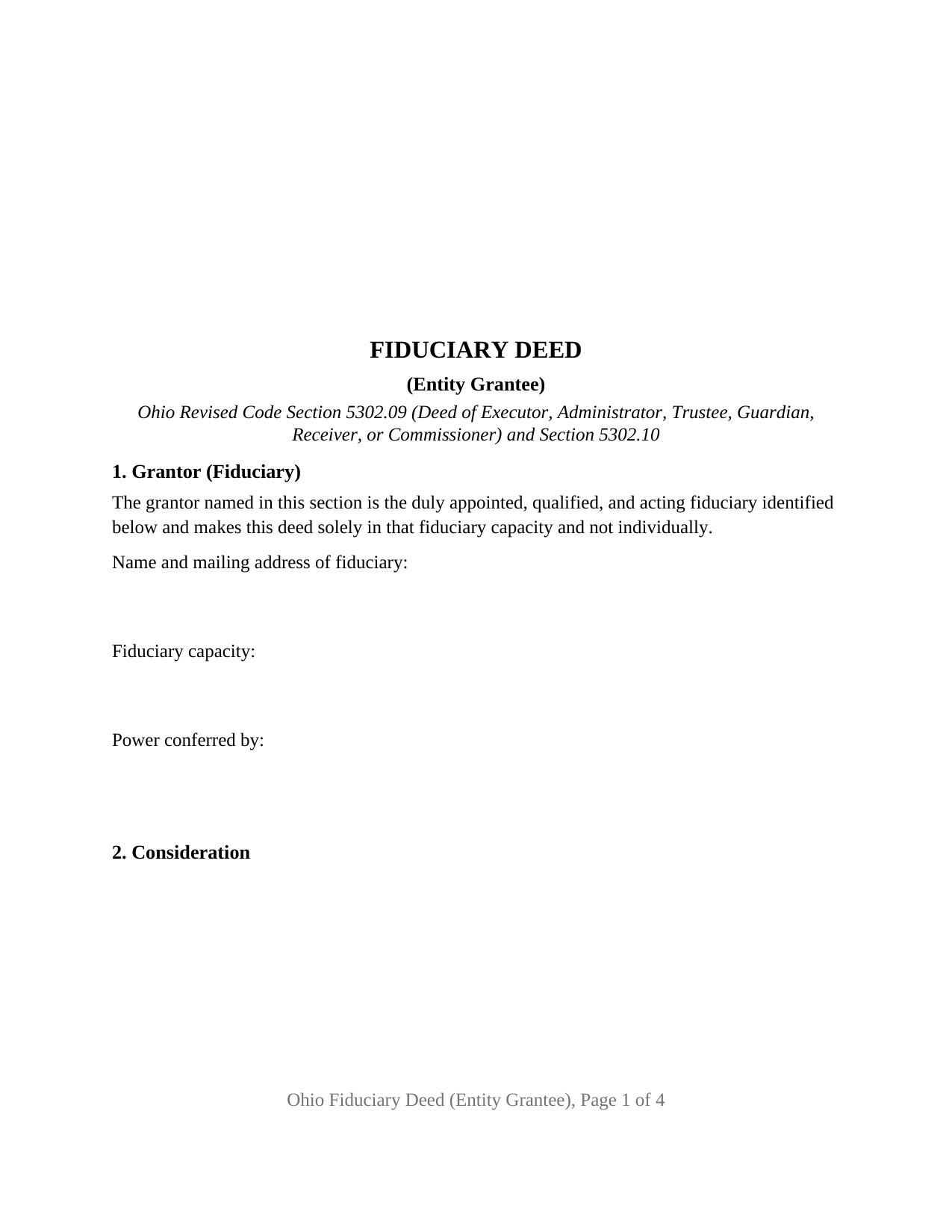
About the Ohio Fiduciary Deed (Entity Grantee)
How to Use This Form
- Select your county from the list
- Download the county-specific form
- Fill in the required information
- Have the document notarized if required
- Record with your county recorder's office
What Others Like You Are Saying
"I found there were a large number of documents available to download. The file naming on the PDFs co…"
"Amazingly simple, easy to download and use. Excellent service, Thank You"
"This is my first time using this service so having not yet filed the documents I purchased, I will s…"
"Quick, easy, and accurate. And if there's ever a problem, the resolution is also quick, easy, and ac…"
"Easy forms for DIYers"
4.8/5 from 4,831 reviews. Read all
An Ohio fiduciary deed to an entity grantee vests real property in a company rather than a person: a limited liability company, a corporation, or a partnership takes title in its own name, on the signature of the one fiduciary who sells it. This form prepares that deed under Ohio Revised Code Section 5302.09 for one executor, administrator, trustee, guardian, receiver, or commissioner conveying, with fiduciary covenants, to exactly one legal entity.
Title in the company's own name
Section 1706.04 makes a limited liability company a separate legal entity, Section 1701.13(F)(1) lets a corporation acquire and hold property, and Section 1776.23 makes property conveyed to a partnership in its name property of the partnership. The grantee section opens with a fixed recital that the grantee is one legal entity organized under law and takes title in its own name as the sole grantee, followed by blanks for the entity's name as its organizing state records it, its type and jurisdiction, and the tax-mailing address Section 319.20 requires before the county auditor transfers the parcel. Because the deed names one grantee, it creates no tenancy in common and no survivorship tenancy.
One fiduciary signs, and no officer of the buyer does
The grantor block carries a fixed recital that the grantor is the duly appointed, qualified, and acting fiduciary identified in the deed and conveys solely in that capacity, with blanks for the fiduciary's name, the fiduciary capacity in the words of the statutory form, and the source of the power conferred: a power of sale in a will, which Section 2113.39 lets an executor exercise without a court order; the probate court's entry confirming a land sale under Chapter 2127; consents filed under Section 2127.011; or the article of a trust instrument, read with the memorandum of trust Section 5301.255 requires of record when a trustee of a disclosed trust conveys. One signature block headed GRANTOR (FIDUCIARY) and one acknowledgment certificate follow, the certificate in the short form Section 147.55(F) prints for a public officer, trustee, or personal representative. The grantee entity signs nothing, and no dower release appears, since the grantor conveys in a representative capacity. A successor trustee selling trust real estate to a limited liability company, an administrator selling a decedent's rental house to a corporation after a confirmed land sale, and a guardian conveying a ward's parcel to a partnership under the court's order present the single entity grantee pattern this deed recites. A deed to natural persons, to a married couple with survivorship words, to the trustee of a trust, or by two co-fiduciaries who both sign presents a different pattern, and the form is not set up as any of them.
Covenants that run from the office, not the chain of title
The operative words are the statute's, grants, with fiduciary covenants, and Section 5302.10 fixes their meaning: the fiduciary covenants that the appointment the deed describes is real and current, that authority to make the sale and conveyance exists, and that the statutes governing the sale were followed. Nothing in those words promises a clean title; the entity takes the interest the estate, trust, or ward held, subject to the encumbrances, reservations, and exceptions the deed lists.
What the auditor sees on an entity purchase
A fiduciary's sale to a company is a conveyance for value, so the deed travels to the county auditor with the DTE 100 conveyance fee statement under Section 319.202 before the recorder accepts it, and the auditor's transferred stamp is the prerequisite Section 317.22 sets for recording. Where the parcel is residential rental property, the auditor's endorsement directs the new owner to the filing Section 5323.02 requires, which for a company owner names a member, manager, officer, general partner, or trustee with an address and telephone number. The deed is built to the Section 317.114 format and carries the Section 317.111 preparer statement.
The package includes the fillable fiduciary deed, a completed example filled in for a successor trustee's sale of a Franklin County parcel to an Ohio limited liability company, and the guide that explains each numbered section and the steps at the auditor and the recorder. The description on this page and the guide describe the form and the governing Ohio statutes in general terms; neither is legal advice.
Important: County-Specific Forms
Our fiduciary deed (entity grantee) forms are specifically formatted for each of the 88 counties in Ohio.
After selecting your county, you'll receive forms that meet all local recording requirements, ensuring your documents will be accepted without delays or rejection fees.