South Carolina Personal Representative Deed of Distribution
County Specific Legal Forms Validated as recently as October 12, 2026 by our Forms Development Team
About the South Carolina Personal Representative Deed of Distribution
How to Use This Form
- Select your county from the list
- Download the county-specific form
- Fill in the required information
- Have the document notarized if required
- Record with your county recorder's office
What Others Like You Are Saying
"This is so convenient. Thank you."
"Excellent - no reservations. I used them on a Sunday and had my info on Monday. Not only did they ex…"
"excellent and timely service."
"I love simple and easy! This is the model that many businesses should use!"
"I got what I needed and you provided great templates."
4.8/5 from 4,829 reviews. Read all
In South Carolina, title to a decedent's real property devolves at death to the decedent's heirs (intestate estates) and devisees (testate estates) (S.C. Code 62-3-101). Though title passes by operation of law, the estate is still subject to administration in probate. Probate is the legal process of settling the decedent's estate and distributing assets to those entitled to receive it. A PR may not make distribution of the estate without first obtaining permission from the court.
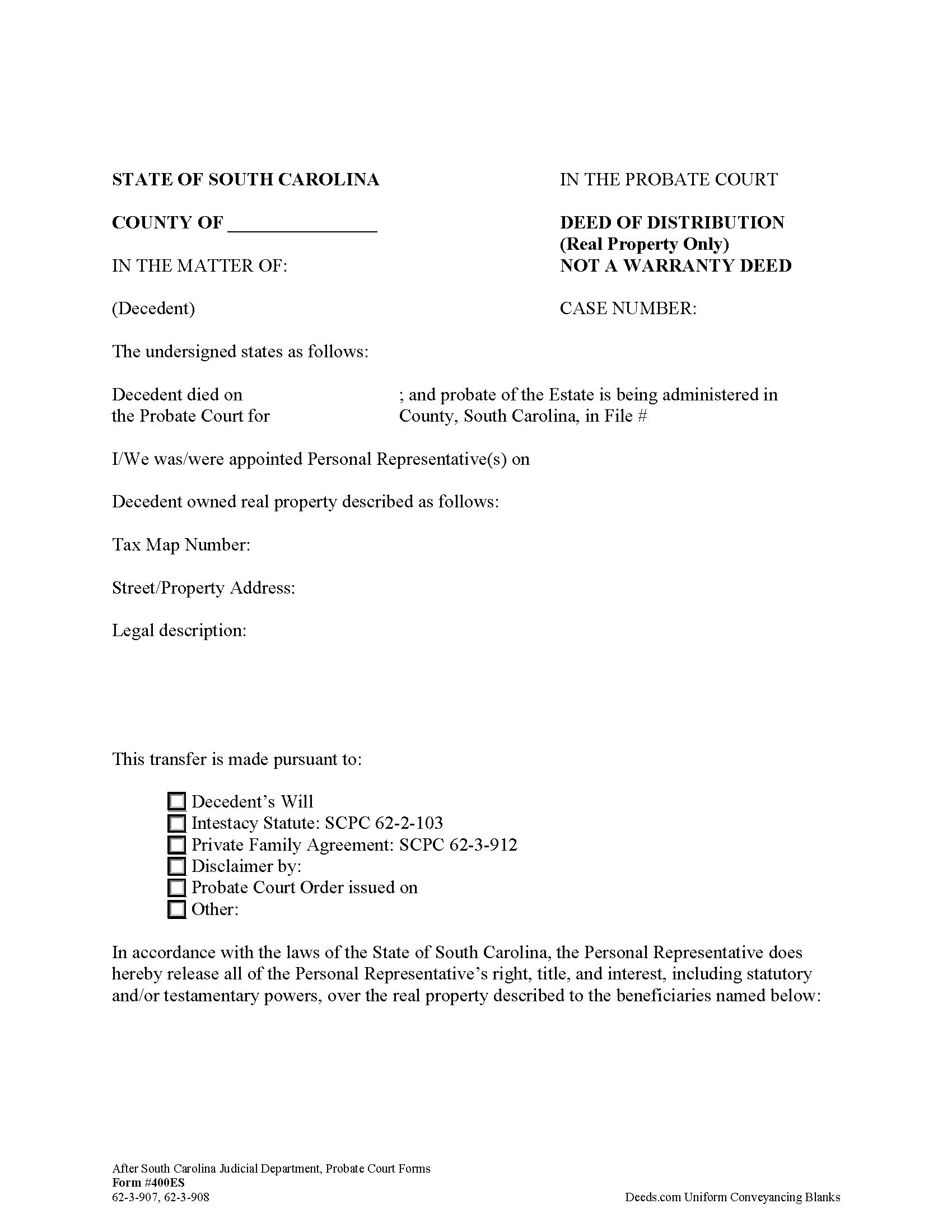
The personal representative (PR) of the estate executes a deed of distribution following an order for distribution from the court to distribute real property from a decedent's estate. The deed of distribution (Form 400ES) evidences the legal succession of title of the decedent's interest in real property and releases the PR's powers over the subject property.
The deed, given under 62-3-907, 62-3-908 is "conclusive evidence that the distributee has succeeded to the interest of the estate...against all persons interested in the estate" (62-3-908).
Apart from meeting all state and local standards for documents affecting title to real property, the deed of distribution must identify the reason for the transfer (i.e., a will, laws of intestacy, a family agreement, disclaimer, or order), and name each beneficiary and the percent of the decedent's interest in the subject property he or she is inheriting.
The deed of distribution is signed by the acting PR in the presence of a notary public and two witnesses before recording in the Register of Deeds' office of the county where the subject property is situated. A certified copy should be delivered to the probate court.
Consult a lawyer with questions regarding probate and deeds of distribution in South Carolina, as each situation is unique.
(South Carolina PRDOD Package includes form, guidelines, and completed example)
Important: County-Specific Forms
Our personal representative deed of distribution forms are specifically formatted for each of the 46 counties in South Carolina.
After selecting your county, you'll receive forms that meet all local recording requirements, ensuring your documents will be accepted without delays or rejection fees.