Texas General Warranty Deed with Vendors Lien (Third-Party Lender)
County Specific Legal Forms Validated as recently as September 14, 2026 by our Forms Development Team
About the Texas General Warranty Deed with Vendors Lien (Third-Party Lender)
How to Use This Form
- Select your county from the list
- Download the county-specific form
- Fill in the required information
- Have the document notarized if required
- Record with your county recorder's office
What Others Like You Are Saying
"So far, so good. explanations provided for the forms and instructions on how I should proceed were c…"
"Very easy form to us. Instructions very good."
"I really enjoyed your service. It was great."
"Was very pleased with execution of the forms. Easy to understand and was hassle free."
"Website is basic, but get's the job done. Communication was prompt and efficient. Would use again. T…"
4.8/5 from 4,803 reviews. Read all
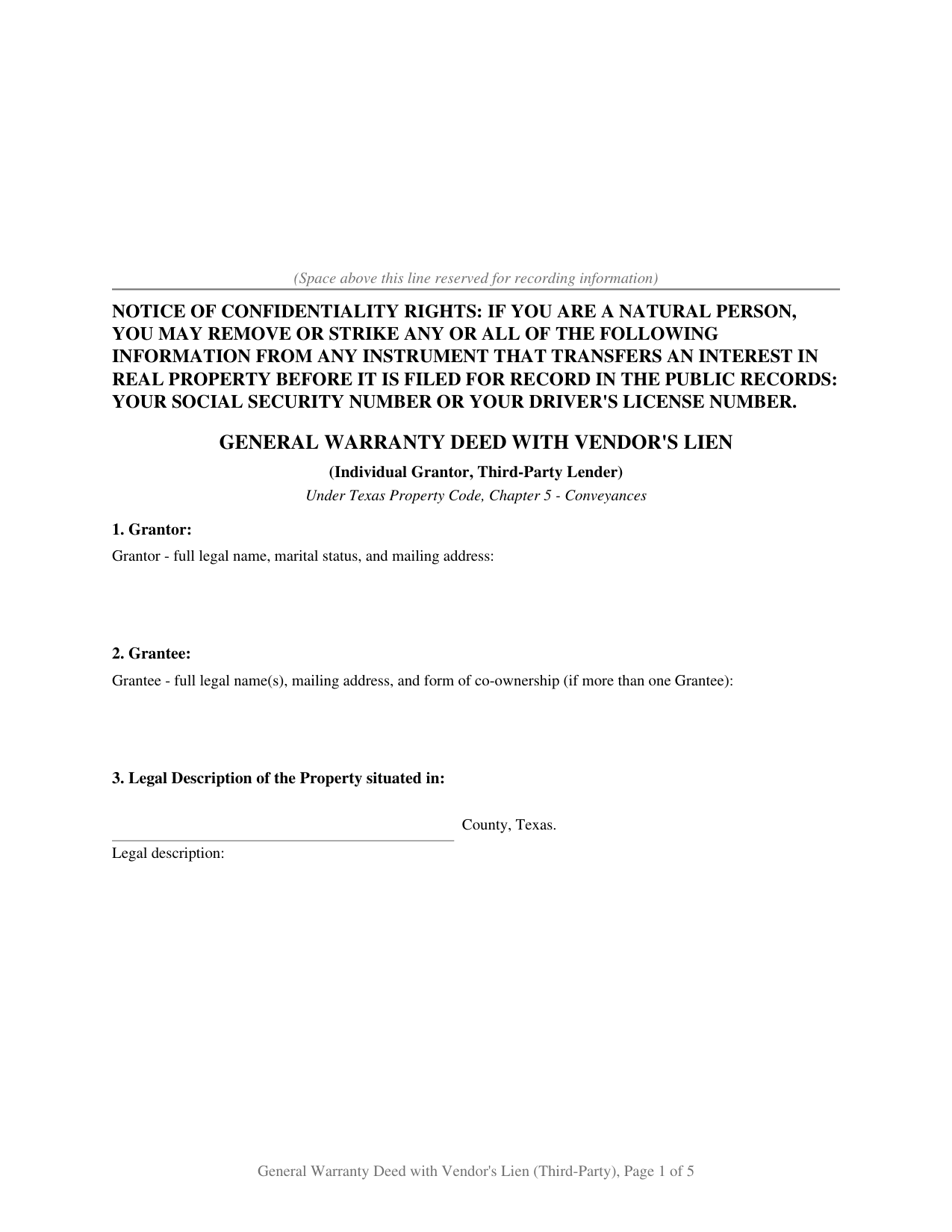
The Texas general warranty deed with a vendor's lien for a third-party lender is the deed of an ordinary financed purchase. The Grantor sells real property with the broadest title warranty Texas recognizes; a lender advances the purchase money at the buyer's request; and the vendor's lien and superior title are retained and transferred to the lender to secure the buyer's purchase-money note. The deed conveys the Property to the buyer and passes the seller's purchase-money lien to the lender, until the note is paid and the deed becomes absolute. This package prepares the deed for a single Grantor, with a fillable form, a completed example, and a section by section guide.
How the vendor's lien reaches the lender
A vendor's lien is the security for the unpaid purchase price of land. The express vendor's lien written into the deed reserves to the grantor not only the lien but superior title to the property until the note is paid. When a third-party lender, rather than the seller, advances the purchase money, that security serves the lender: the deed retains the vendor's lien and superior title for the lender's benefit and transfers and assigns them to the lender. The lender then holds a purchase-money lien, which carries the priority of purchase-money security, in addition to the deed of trust the buyer signs, a separate instrument that adds the power to foreclose without going to court.
What the form covers
The deed is organized into numbered sections that track the order of a recorded Texas conveyance:
- A Grantor block and a grantee block, with marital status and the form of co-ownership where it applies
- The legal description of the property and its street address
- The source of title, identifying the recorded instrument by which the Grantor holds
- Reservations and exceptions, which carve matters out of both the conveyance and the warranty
- The consideration recital and the operative general warranty language
- The lender, the purchase-money note, and the retained vendor's lien transferred to the lender
Signing and recording
The Grantor signs the deed before a notary public, who completes the acknowledgment certificate. Where the property is the homestead of a married Grantor, the Grantor's spouse joins under Texas Family Code Section 5.001 by signing the second block to convey the homestead interest; where the property is not homestead or the Grantor is unmarried, that block stays blank. Neither the buyer nor the lender signs the deed; the buyer signs the separate note and deed of trust. The deed is then recorded with the county clerk where the property is located, placing the lender's vendor's lien in the public record. The confidentiality notice required by Property Code Section 11.008 appears at the top of the first page, and Senate Bill 16 added a photo identification requirement at the recording counter for instruments filed in person on or after December 4, 2025.
What the package includes
The package contains a blank fillable deed, a completed example, and a guide that explains each section, the transfer of the vendor's lien to the lender, and recording. The materials are informational and are not legal advice.
Important: County-Specific Forms
Our general warranty deed with vendors lien (third-party lender) forms are specifically formatted for each of the 254 counties in Texas.
After selecting your county, you'll receive forms that meet all local recording requirements, ensuring your documents will be accepted without delays or rejection fees.