Mississippi Quitclaim Deed
County Specific Legal Forms Validated as recently as October 4, 2026 by our Forms Development Team
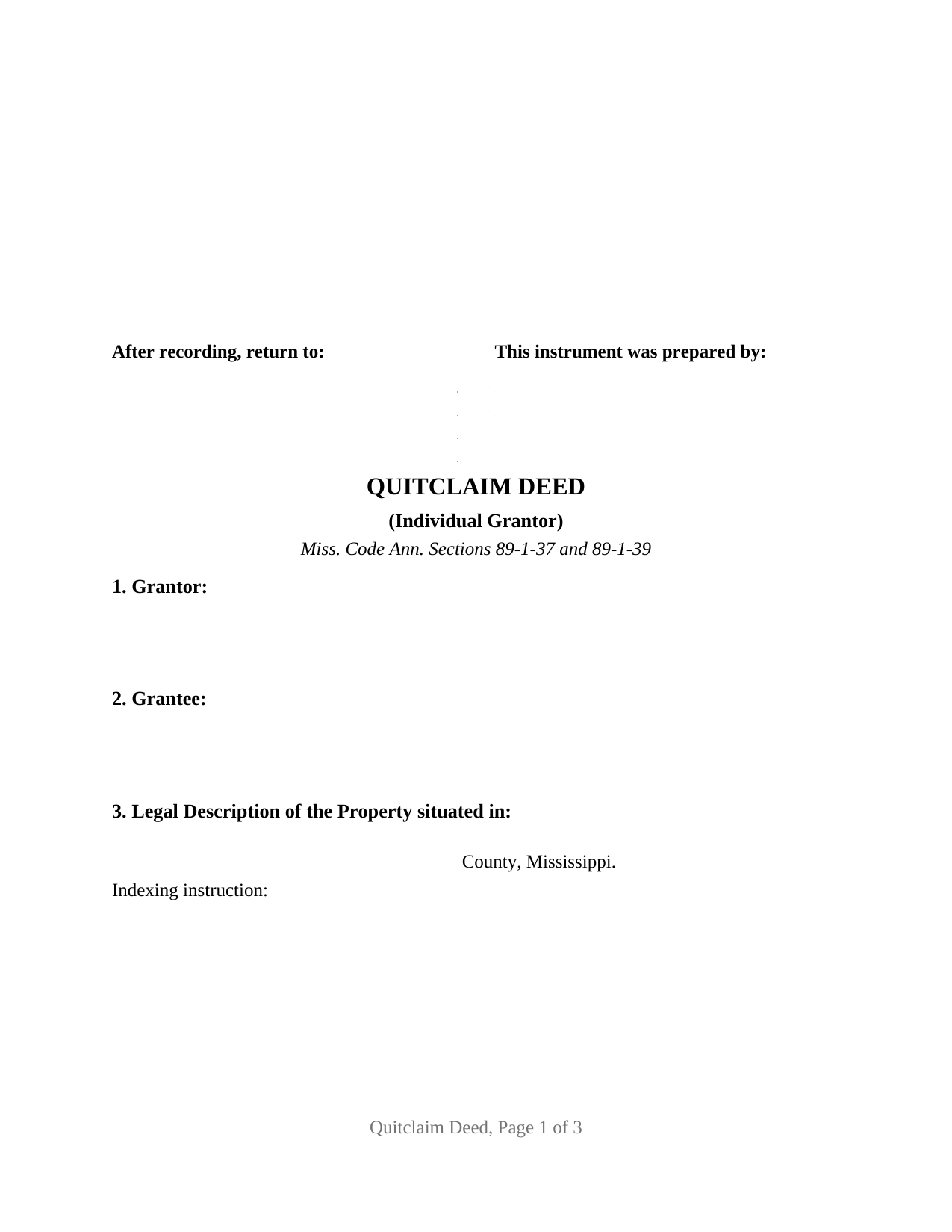
About the Mississippi Quitclaim Deed
How to Use This Form
- Select your county from the list
- Download the county-specific form
- Fill in the required information
- Have the document notarized if required
- Record with your county recorder's office
What Others Like You Are Saying
"I was very impressed with this service. It's a very important tool to be able to get the documents f…"
"Had used website while working as Land Rep for major oil company (retired 2.5 years ago). Recently h…"
"It turned out I didn't need the information was taken care of by my husband. Thank you."
"I found the process of downloading and completing the documents very user friendly. Thank you for th…"
"Easy to use!!"
4.8/5 from 4,828 reviews. Read all
A Mississippi deed does its work at delivery, but the chancery clerk's file stamp decides something else: the minute from which the conveyance stands against creditors and later buyers. That timing carries extra weight on a deed that arrives with no covenants behind it, which is what this fillable quitclaim deed prepares, for natural persons conveying whatever right, title, and interest they hold in a described parcel.
Delivery moves the title, the clerk's minute fixes the priority
Miss. Code Ann. Sections 89-5-1, 89-5-3, and 89-5-5 carry the state's recording rule. An unrecorded conveyance binds the parties to it and anyone who has notice or who did not pay value, and it is not good against creditors or a later purchaser for value without notice until it has been acknowledged or proved and lodged with the clerk of the chancery court. Once competing instruments reach the clerk, filing time settles priority where actual notice is absent, and Section 89-5-25 tells the clerk to record without delay and note the hour the document arrived. A grantee here has no covenant to sue on later, so the record at that minute is the whole of what passed.
What passes when no covenant does
Mississippi reads deeds by their operative words. Section 89-1-61 sets out a short statutory form running on convey and warrant, and Section 89-1-33 packs five covenants into that one word: seizin, power to sell, freedom from encumbrance, quiet enjoyment, and warranty of title. This instrument uses none of them. Section 89-1-37 provides that a conveyance without any warranty operates to transfer the title and possession of the grantor as a quitclaim and release, and Section 89-1-39 makes that release sufficient to pass all the estate or interest the grantor has, while estopping the grantor and the grantor's heirs from asserting a subsequently acquired adverse title. No statutory quitclaim template exists in the Mississippi Code, so Section 9 states the release and a capitalized paragraph disclaims those five covenants by name. Searches spelled quit claim deed, in two words, land here as well.
One or two people on either side
The party blocks are deliberately unprinted. Section 1 holds one or two grantor names with whatever status wording the parties state; Section 2 holds one or two grantee names and, where two take, the words fixing how they hold, from the tenancy in common Section 89-1-7 supplies by default to the survivorship estates that section allows only where they manifestly appear. Nothing about marriage, capacity, or vesting is preprinted; the entry written into a blank is what reaches the record. Execution matches those counts: a GRANTOR block and a SECOND GRANTOR block, each with a printed name line and its own acknowledgment certificate, so two signers may appear on different dates or before notaries in different states, and the second block and certificate stay blank on a one grantor fill. The form is not laid out for a signer acting for someone else, whether an entity officer, a trustee, an agent under a power of attorney, or a fiduciary appointed by a court, nor for three or more owners on either side, nor for a spouse who signs only to answer the homestead statute while conveying nothing.
Written to the chancery clerk's intake
Mississippi conditions recording on data the deed itself carries. Section 27-3-51 attaches a mailing address and business and residential telephone numbers to every grantor and grantee, and a clerk may hand back a deed without them. Section 89-5-33(3) wants the indexing instruction distinctly set apart, so it holds Section 3 alone, and the same subsection governs the preparer entry on page one, Bar number included for an attorney preparer. Section 89-5-24 supplies the physical standards: three inches of page one belong to the clerk, the subsection (2) items (preparer, return address, title, parties, indexing instruction) placed beneath, ten point minimum type, twenty pound white paper, a printed name under each signature. Recording runs twenty-five dollars for five pages under Section 25-7-9, and this deed prints in exactly five. Where the parcel is homestead and a conveying owner is married and living with a spouse, Section 89-1-29 calls for that spouse's signature, and spouses who both convey sign as the two grantors.
Three files download together: the blank quitclaim deed as a fillable PDF, a completed example carrying a Rankin County conveyance through both certificates, and a plain-language guide to every numbered section, the grantee vesting words, signing, and recording. The materials are informational and are not legal advice.
Important: County-Specific Forms
Our quitclaim deed forms are specifically formatted for each of the 82 counties in Mississippi.
After selecting your county, you'll receive forms that meet all local recording requirements, ensuring your documents will be accepted without delays or rejection fees.