Alabama Contract for Deed
County Specific Legal Forms Validated as recently as October 5, 2026 by our Forms Development Team
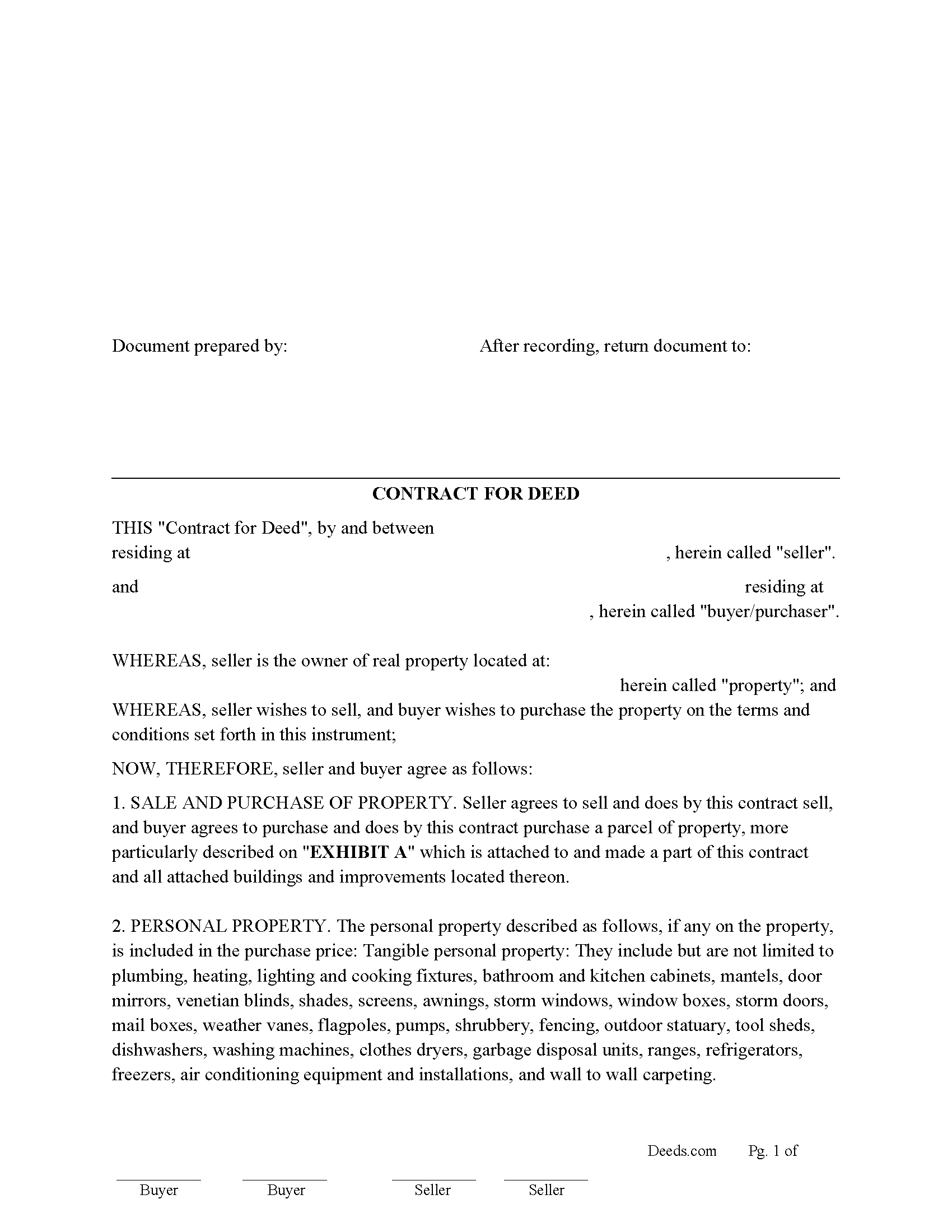
About the Alabama Contract for Deed
How to Use This Form
- Select your county from the list
- Download the county-specific form
- Fill in the required information
- Have the document notarized if required
- Record with your county recorder's office
What Others Like You Are Saying
"My deeds were filed with Pinellas County Florida with a simple process and with no problems. 5 star …"
"Thanks for your service. I recieved my documents on time and package information as promise."
"thumbs up"
"Thought it was great, no issues. Very convenient especially dealing with difficult municipalities an…"
"Really liked the quick access to documents. Great service, thanks."
4.8/5 from 4,820 reviews. Read all
An Alabama Contract for Deed is used to structure a real estate sale where the seller finances the purchase and keeps legal title until the buyer completes the payment terms. In Alabama, this arrangement carries specific recording, tax, and title implications because the buyer’s interest is often equitable rather than legal until the contract is fulfilled. If the contract is not properly documented and, where appropriate, recorded in the county probate records, the buyer’s interest may not be protected against later claims or transactions involving the property.
What the Alabama Contract for Deed does
An Alabama Contract for Deed allows a buyer to take possession of property and make installment payments directly to the seller instead of obtaining third-party financing. The seller retains legal title during the payment period, and the deed is delivered only after the contract is satisfied. This type of agreement is commonly used for residential, rental, or investment property where flexible payment terms are negotiated between the parties. The contract outlines payment structure, default provisions, and the conditions under which title will transfer.
Alabama statutory framework and recording status
Alabama law recognizes conditional sale contracts, including contracts for deed, as instruments that may affect real property and therefore may be recorded to provide notice to third parties. Recording is done in the office of the Judge of Probate in the county where the property is located (Ala. Code § 35-4-62). Once recorded, the contract provides constructive notice of the buyer’s interest (Ala. Code § 35-4-63), and Alabama’s race-notice statute protects subsequent purchasers and lenders without notice (Ala. Code § 35-4-90).
Alabama’s Statute of Frauds requires contracts involving interests in land to be in writing to be enforceable (Ala. Code § 8-9-2). Conditional sale and installment sale arrangements are also addressed under Alabama’s recordation tax provisions, which govern how such agreements are treated when recorded (Ala. Code §§ 40-22-1 through 40-22-12).
Execution requirements for an Alabama Contract for Deed
To be recordable, an Alabama Contract for Deed must be executed in compliance with Alabama law. The seller and buyer should both sign the agreement. Alabama requires that conveyances affecting land be attested by at least one witness if the signer writes his or her name, unless the document is properly acknowledged before a notary public (Ala. Code § 35-4-20). A proper acknowledgment satisfies the statutory execution requirement for recording (Ala. Code § 35-4-23).
The names of the parties must match how title is currently held and how the parties intend to be reflected in the final deed. If the property is owned by an entity, the execution must reflect the entity’s legal name and authorized signatory.
Alabama-specific traps that cause recording or title problems
- Marital-status recital: Alabama requires that the marital status of the conveying party be stated before the probate judge records the instrument (Ala. Code § 35-4-73). Missing this recital can result in rejection.
- Homestead spousal assent: If the property is homestead property and the seller is married, Alabama law requires the voluntary signature and assent of the spouse for a valid conveyance affecting the homestead (Ala. Code § 6-10-3).
- Preparer identification: The document must include the name and address of the preparer (Ala. Code § 35-4-110), a requirement often missed on non-Alabama forms.
- Legal description requirements: The property description must be complete and consistent with recorded deeds. If a subdivision or plat is referenced, proper recorded plat information must be included (Ala. Code § 35-4-74).
- Recording timing and priority: If the contract or a memorandum of it is not recorded, the buyer’s interest may not be protected against later purchasers or lenders without notice under Alabama’s race-notice system.
- Deed tax and recording treatment: Alabama may impose recordation taxes on instruments affecting real property, and the treatment of a contract for deed can vary depending on how it is presented for recording under Title 40, Chapter 22.
- Exact name matching: Any inconsistency between the contract and existing title records can create issues when the final deed is delivered or when the contract is reviewed during a title search.
Recording process in Alabama
An Alabama Contract for Deed may be recorded with the Judge of Probate in the county where the property is located. In many cases, parties choose to record either the full contract or a memorandum of the agreement to provide public notice while keeping detailed terms private. Recording promptly helps establish the buyer’s position in the public record and can prevent later disputes over priority.
Recording fees apply, and Alabama probate offices determine any applicable recordation taxes under Title 40, Chapter 22 based on the nature of the instrument. Proper formatting, acknowledgment, and required recitals should be in place before submission to avoid delays.
Vesting considerations in Alabama
Under a contract for deed, the seller retains legal title until the contract is satisfied, while the buyer holds an equitable interest during the payment period. Alabama does not presume survivorship in co-ownership unless it is expressly stated in the creating instrument (Ala. Code § 35-4-7). Ensuring that the contract reflects the intended ownership structure and matches existing title records helps avoid complications when the final deed is delivered.
What is included in the download package
The Alabama Contract for Deed package includes the form, detailed instructions, and a completed example. It is designed for Alabama use and addresses probate recording requirements, acknowledgment or witness compliance, preparer identification, marital-status recitals, and proper property description formatting.
Important: County-Specific Forms
Our contract for deed forms are specifically formatted for each of the 67 counties in Alabama.
After selecting your county, you'll receive forms that meet all local recording requirements, ensuring your documents will be accepted without delays or rejection fees.