Florida Quitclaim Deed (Trustee Grantor)
County Specific Legal Forms Validated as recently as October 9, 2026 by our Forms Development Team
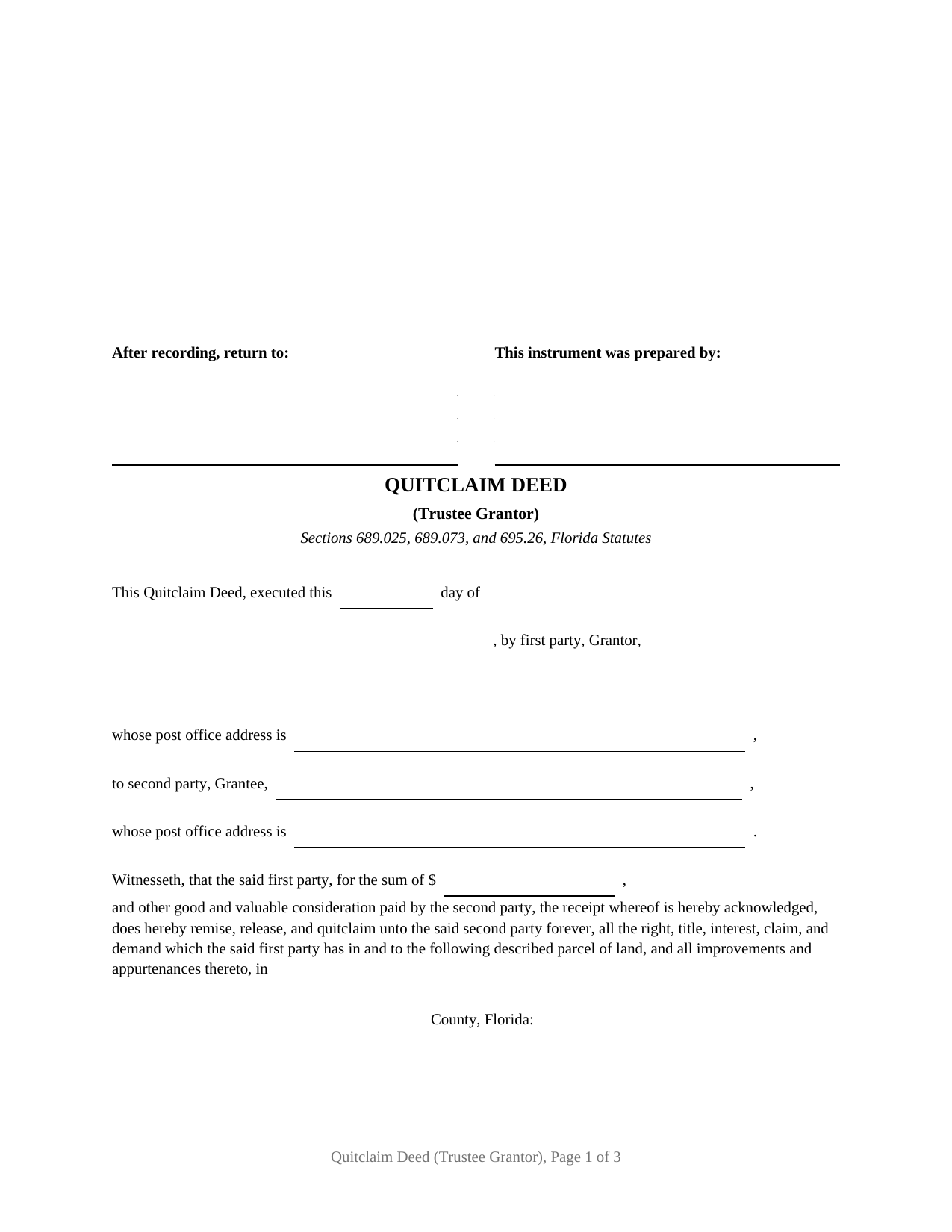
About the Florida Quitclaim Deed (Trustee Grantor)
How to Use This Form
- Select your county from the list
- Download the county-specific form
- Fill in the required information
- Have the document notarized if required
- Record with your county recorder's office
What Others Like You Are Saying
"Easy to use and instructions were very clear. If possible, it would be nice to be able to download t…"
"Great service. Very easy to follow instructions and examples. I would use again."
"I ordered the wrong forms at first because I'm an idiot and didn't do my research. When I told the c…"
"Forms were top notch, easy to complete, printed beautifully, recorded with no revisions. Highly reco…"
"Excellent service. Easy to use, easy to upload, and very cost effective!"
4.8/5 from 4,828 reviews. Read all
When Florida land sits in a trust, the public record shows the trustee as the titleholder, and the deed that moves the land out again is signed by that trustee in a representative capacity. This quitclaim deed prepares that conveyance: a trustee grantor releasing whatever interest the trust holds, using the statutory language Florida adopted in 2023 and the trust identification that Florida's trustee-title statutes reward.
Statutory quitclaim words, new in 2023
Chapter 2023-238, Laws of Florida, created Section 689.025, Florida Statutes, the state's first prescribed quitclaim form. A Florida quitclaim deed is now substantially in the statutory form: the first party, for the stated sum and other good and valuable consideration, does hereby remise, release, and quitclaim unto the second party forever, all the right, title, interest, claim, and demand which the first party has in and to the described parcel of land, with its improvements and appurtenances. This deed carries that language verbatim, along with the parcel identification number blank the statute requires.
A quitclaim conveys the grantor's interest and promises nothing about it, and the deed says so: no covenant or warranty of title, express or implied. Florida's recording act nonetheless treats the grantee well; Section 695.01(2) deems quitclaim grantees bona fide purchasers without notice.
Why the trustee capacity line does real work
Two statutes make the trustee identification more than a formality. Section 689.073 protects persons dealing with a trustee where the recorded instrument that vested title in the trustee conferred the power to sell and convey; this deed identifies that vesting instrument by its recording reference, so the chain of title shows the authority on its face. Section 689.07 supplies the trap the drafting avoids: a bare trustee label with no trust named can operate as an individual fee simple conveyance. The grantor line therefore carries the trustee's name with the trust's title and date, and a capacity paragraph states that the trustee signs in the representative capacity only and not individually.
One trustee, one signature, one certificate
The form recites one first party holding record title as trustee, one second party as grantee, and a Trustee Title and Authority section naming the recorded instrument that vested title in the trustee. The execution side is built for that one signature: a signature block headed for the grantor as trustee, a pair of subscribing witness blocks, and a single trustee acknowledgment certificate, with no joining spouse block anywhere on the deed, since the owner of record is a trustee acting in a representative capacity. Records presenting this configuration include a trustee distributing a parcel to a beneficiary after the settlor's death, a trustee returning a lot to the settlor who funded the trust, and a trustee releasing to a purchaser whatever interest the trust holds. The form is not set up as a deed by an individual signing in his or her own right, by two co-trustees who both sign, by a corporation, company, or partnership, or by an attorney-in-fact under a power of attorney.
Two witnesses, and addresses for both
A Florida deed conveying a freehold interest is signed in the presence of two subscribing witnesses under Section 689.01, and since January 1, 2024, Section 695.26 has required each witness name printed beneath the witness signature and each witness post office address on the instrument. The deed carries printed name and address lines for both witnesses. The certificate is the statutory short form of Section 695.25(6) for an acknowledgment by any public officer, trustee, or personal representative: the officer marks whether the trustee appeared by physical presence or by online notarization, enters the date and the name and title of position of the person acknowledging, and states the identification relied on, with a reserved area under the officer's signature for the rubber stamp seal Section 117.05 places below or beside it. At the counter, documentary stamp tax under Section 201.02 falls due with the recording fee, computed on consideration as chapter 201 defines it, mortgage balance included; a conveyance by a trustee is analyzed under the Department of Revenue's trust rule, which looks to beneficial ownership and consideration rather than to the trustee label.
The package includes the blank deed as a fillable PDF with a non-recorded instructions page, a completed example showing a trustee's distribution of an Orange County lot, and a plain-language guide that walks through every blank, the witness and notary formalities, recording charges, and the documentary stamp computation. The materials describe Florida law in general terms and are not legal advice.
Important: County-Specific Forms
Our quitclaim deed (trustee grantor) forms are specifically formatted for each of the 67 counties in Florida.
After selecting your county, you'll receive forms that meet all local recording requirements, ensuring your documents will be accepted without delays or rejection fees.