Illinois Trustee Deed
County Specific Legal Forms Validated as recently as October 29, 2026 by our Forms Development Team
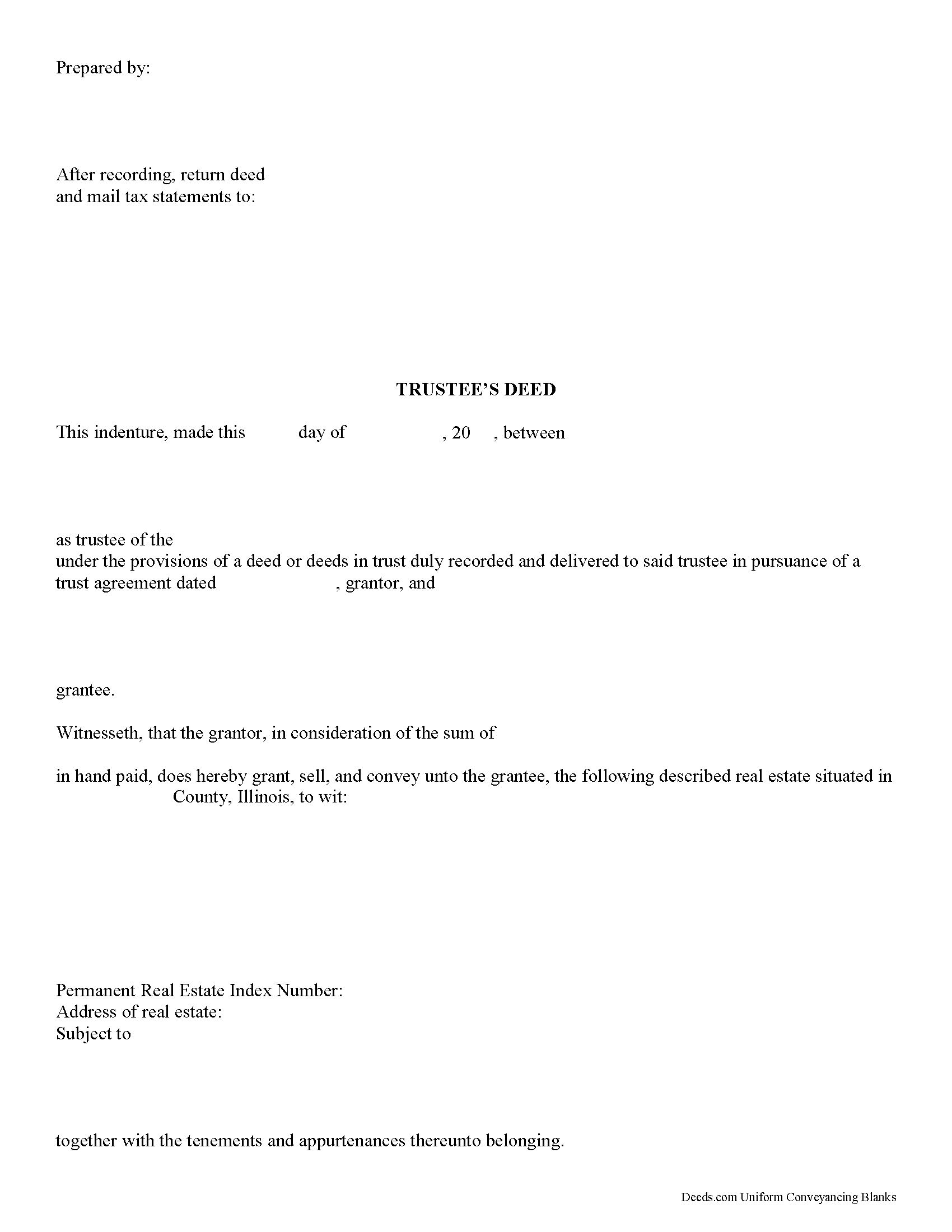
About the Illinois Trustee Deed
How to Use This Form
- Select your county from the list
- Download the county-specific form
- Fill in the required information
- Have the document notarized if required
- Record with your county recorder's office
What Others Like You Are Saying
"I bought the Quitclaim deed and it was perfect to record at the courthouse"
"It was a simple process and easily understood the process was seamless and I would highly recommend …"
"I received my product in great condition and it works ok. Thankyou!!!"
"Easy access of downloadable forms for use by Pennsylvania, Allegheny County residents."
"Excellent and easy process to use the online fill in the blank sections, especially when you provide…"
4.8/5 from 4,847 reviews. Read all
In Illinois, a trustee's deed is used to transfer real property out of a trust. The deed is named for the person executing it -- the trustee. According to Black's Law Dictionary, 8th ed., a trustee is someone who, having legal title to property, holds it in trust for the benefit of another and owes a fiduciary duty to that beneficiary. A fiduciary is someone who must exercise a high standard of care in managing another's money or property.
The trustee's deed establishes basic information about the trust, such as the name and date of the trust document. The trustee serves as the grantor in the deed, and transfers the title into the grantee's name. As with all other conveyances of real property, the deed requires a legal description of the property being conveyed, as well as a Property Identification Number (PIN) and commonly known address. For a valid transfer, the trustee must sign the deed in the presence of a notary, who confirms (notarizes) the signature.
(Illinois Trustee Deed Package includes form, guidelines, and completed example)
Important: County-Specific Forms
Our trustee deed forms are specifically formatted for each of the 102 counties in Illinois.
After selecting your county, you'll receive forms that meet all local recording requirements, ensuring your documents will be accepted without delays or rejection fees.